

Organic Answers Column – June 14, 2023 – Root Flares
Root Flare Exposure Questions
Even though some in the landscape business said they are tired of me talking so much about root flare exposure, the procedure continues to amaze people with how well it works to reduce or eliminate the stress that leads to mistletoe, heavy gall growth, woodpecker damage, chlorosis, insect pest attack and diseases up to and including oak wilt. I do get a lot of questions from truly curious folks and that the subject of today’s piece.
After removing a lot of soil from the bases of deeply planted trees, is water standing in the depression for a while a problem? In most cases the water evaporates and drains away within a day or so. Remember that before the soil was removed, the flare was staying moist all the time. Having a dry flare that “breathes” properly is an important part of the recommended work and the reason it works so well.
If water stays too long and looks bad, a drainage ditch can be dug from the depression at the base of the tree to a lower point on the site and filled with coarse gravel all the way to the soil surface. I usually don’t do this but it works well when needed.
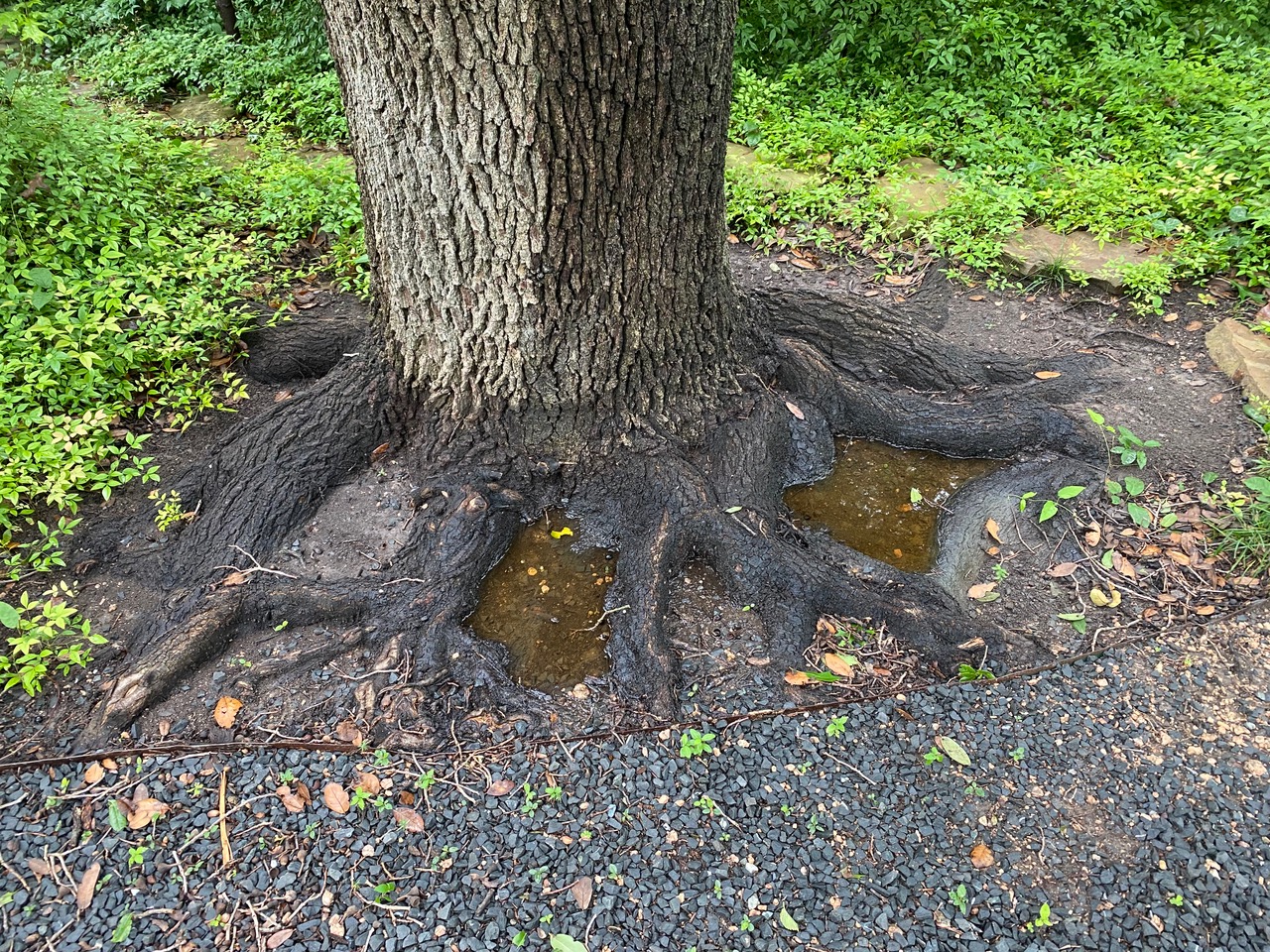
How far down and out the exposure should go is subjective. It depends on how deep the flare is buried. Even if you think the tree was planted correctly at the right height, most trees being sold today are too deep in the container when purchased – both containerized and balled and burlapped trees. You need strongly visible flares all around the tree with none or very little straight or flat bark tissue emerging from the ground. I have never seen a situation where the flare was exposed too much and led to problems.
Should you have to do the exposure more than once? Again, subjective. When water floods a site and debris rebuilds on the base of the tree, the soil and other debris needs to be removed again. Once the tree and the flare grows enough, a redo is rarely needed.
What time of the year is best for the flare exposure work? Fall and winter are probably ideal but I have seen hundreds of trees exposed in every month of the year without any ill effects. In fact, of all the many trees I’ve seen exposed, only two didn’t make it. One was a small fruit tree that had almost no roots at all and the other one was a large oak that because of a leaking irrigation system had pathogens and rot covering almost the entire root system. Both were too far gone, unfortunately. My best advice on when to do the work is – as soon as possible.
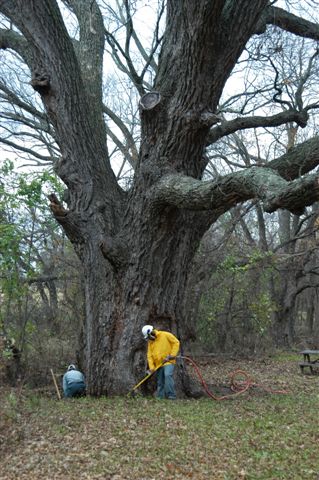
Even the state champion pecan tree in
Weatherford needed the root flare exposed.
Are there some tree varieties that don’t have these issues and don’t need this work? Yes – palm trees have a completely different vascular system and no flares. Some will try to argue that bottomland trees like pecans, green ash and sycamore are used to being deep in the ground and wet, thus don’t the exposure done. These trees are more tolerate of the moist conditions but even they respond beautifully to being exposed properly.
How quickly do results appear after doing the work? In most cases, dramatic improvement in color and new growth is seen soon after the work is done. By the next growing season for sure.
Here’s a past newsletter that covers some additional details on this important, tree saving procedure.