

Dallas Morning News – June 14, 2018
SAGO PALM – PRETTY PLANT THAT MIGHT NOT BE A GOOD CHOICE IN NORTH TEXAS
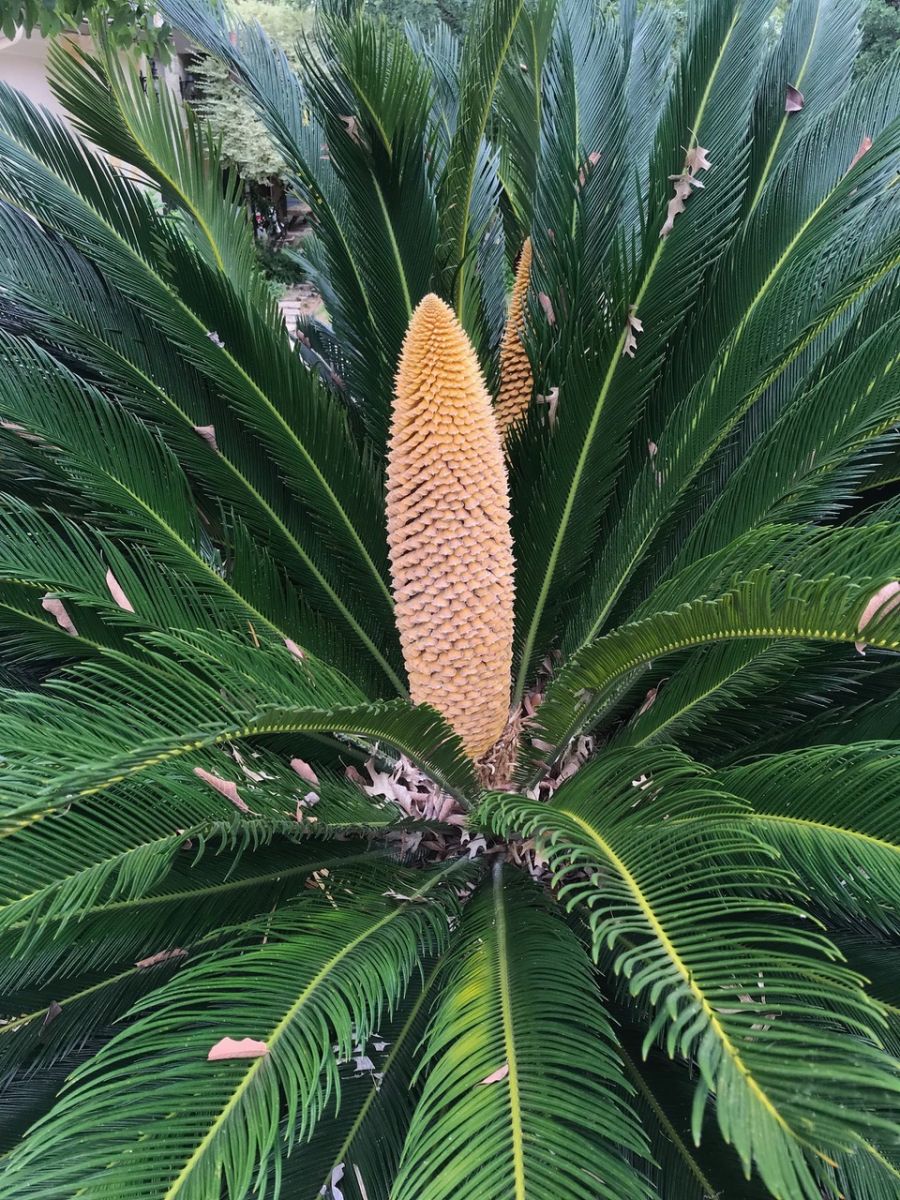
Sago palm (
Cycas revoluta
) is a distinctive evergreen plant that likes full sun to light shade and grows to a height of about 10 feet. Its feather-looking leaves have the appearance of a palm – but this is no palm.
Yes, it’s pretty – in fact it’s flowering and putting on quite a show in the warmer parts of the state this year – but it has two major problems.
First, it can freeze. When maintained under an organic program, these cycads can tolerate zone 8 (that of the Dallas Fort Worth area), but when you are using synthetic fertilizers, freeze damage should be expected. The leaves burn, turn brown and removing them is all that can be done at that point. They will not green up again. If you try to grow this plant in a container, it must be protected in the winter.
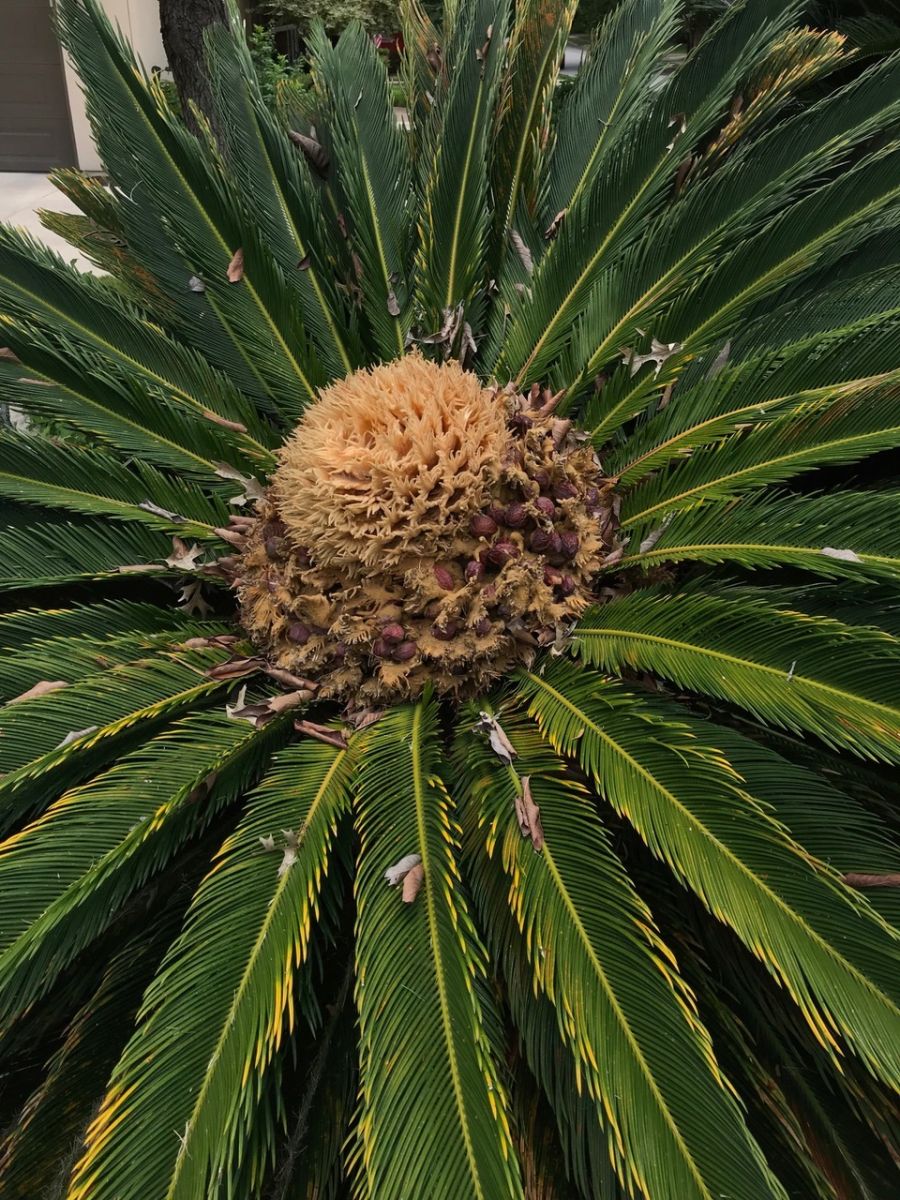
Secondly, it can kill your dogs. Male sago palm flowers produce long, golden, cone- like structures somewhat like large pinecones. If you don’t plan on propagating additional sago plants, you can remove this structure from the plant without causing harm. You may want to do this removal because it is quite toxic, especially to dogs. Female flowering sago palms produce round, golden, fuzzy masses. When ready to be pollinated, the flower will slowly open up usually late spring to early summer. These reproductive parts are the most dangerous to the pets.
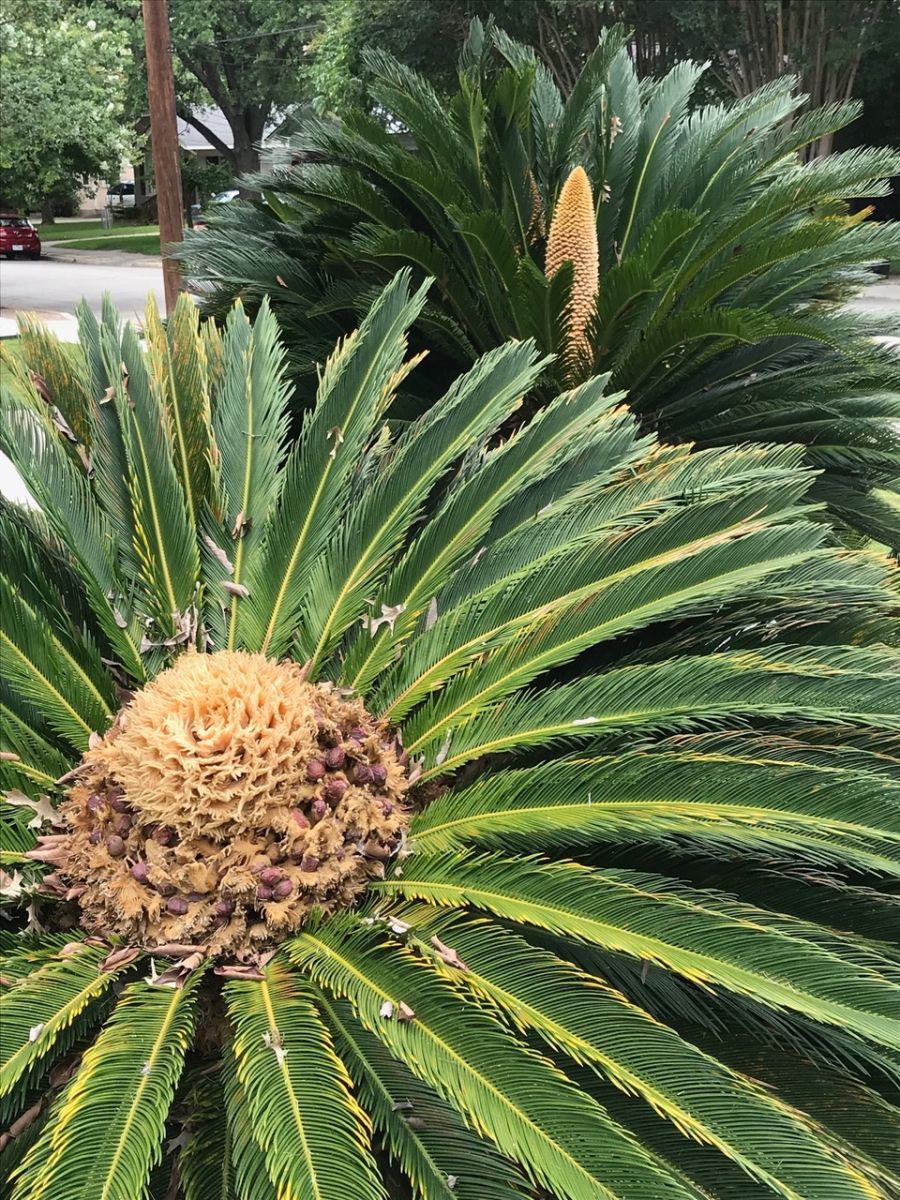
Seeds of sagos are especially poisonous to dogs, but the leaves can also cause severe damage to the liver and potentially death when ingested. Symptoms of acute gut problems include drooling, loss of appetite, vomiting or diarrhea within 15 minutes to several hours. Central nervous system signs include weakness, seizures or tremors. Severe liver failure can be seen within 2-3 days post-ingestion and signs include vomiting, diarrhea, lethargy, inappetance, abnormal fluid accumulation in the abdomen, abdominal pain, jaundice and black-tarry stool.
Sometimes getting the dog to vomit is good, but not always. Owners should never attempt to make their dogs vomit without first consulting a veterinarian. If a local vet is not immediately available, call the ASPCA’s Animal Poison Control Center (888-426-4435) or the Pet Poison Helpline (855-213-6680). Both hotlines are staffed 24 hours a day, 7 days a week and are available to owners at a small charge. National Poison Control line is also available for help at – 800-222-1222.
Bottom line: might want to plant a palm.
Home | Return to Archives