

Wasps – the Pros and the Cons
There are three groups of fascinating wildlife that folks have difficulty appreciating – wasps, spiders and snakes. Today it’s wasps. All wasps are beneficial. They feed on – and feed to their young – pest insects such as plant damaging caterpillars. Yes – some of them will sting but let’s talk about that.
If you don’t like how wasp nests look, fine – we can get rid of them with non-toxic tools, but if wasp nests aren’t in places where kids and anyone highly allergic to stings could bump into them and get hurt, they should be left alone. The wasps are doing some good work.
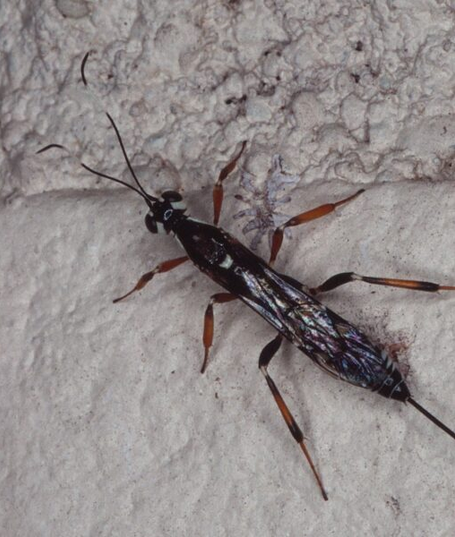
Braconid wasp: it doesn’t sting, and is nothing but a friend
Small wasps like trichogramma and braconid wasps don’t even build nests and can’t sting. However, they do parasitize and eat caterpillars, leaf skeltonizers, pecan casebearers and other pest insects.
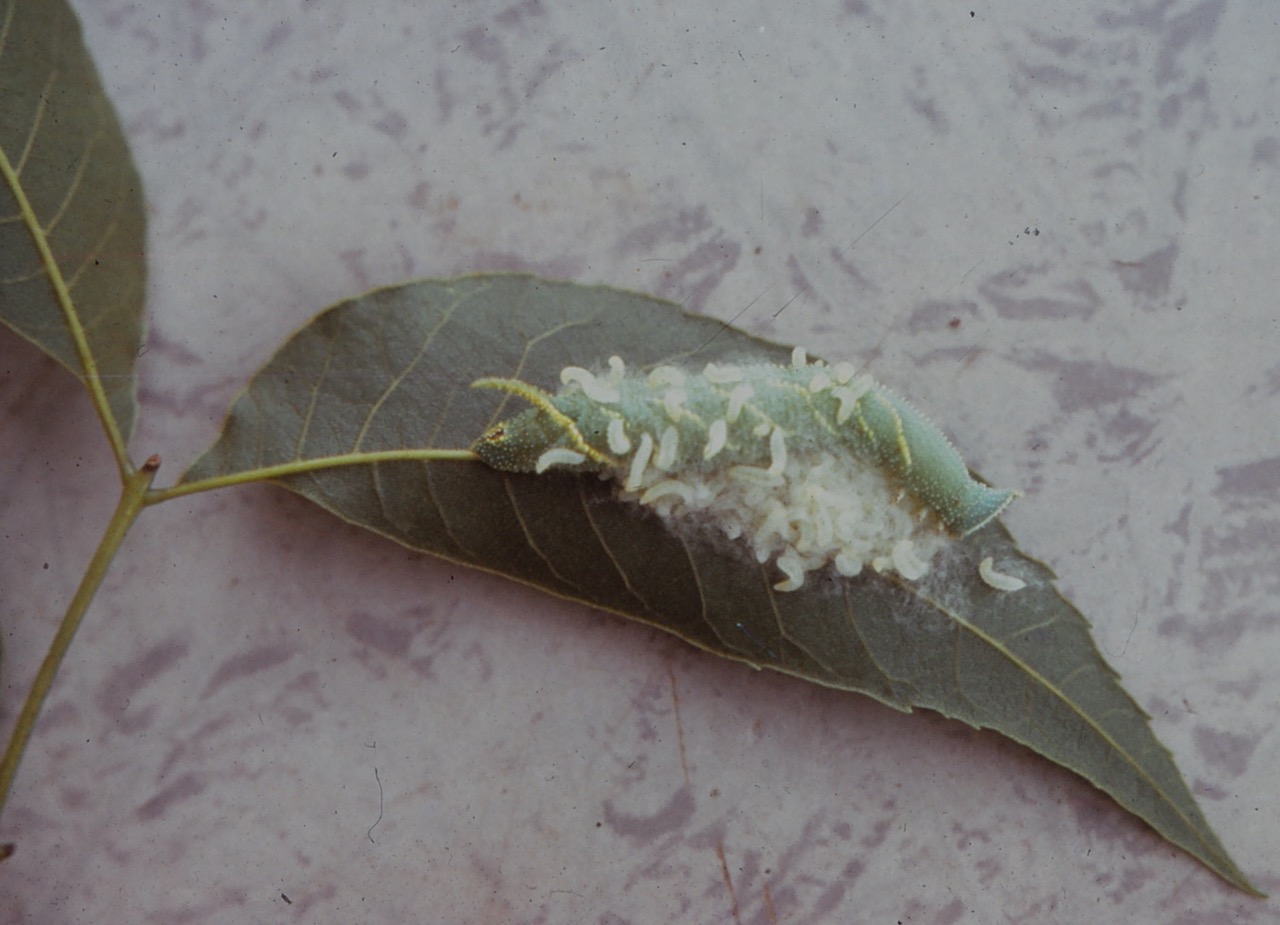
Caterpillar on pecan leaf parasitized by braconid wasp
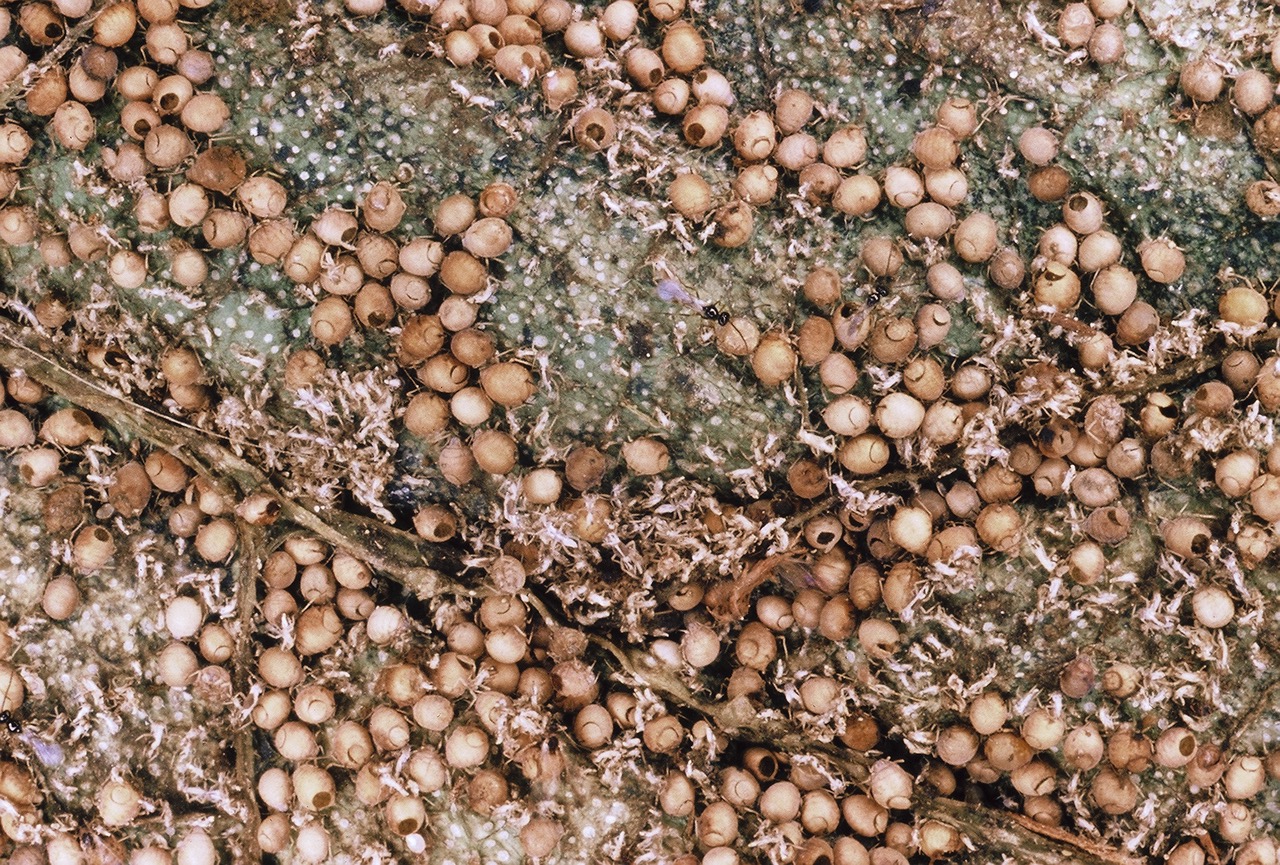
Dead aphids parasitized by braconid wasps
Among the most helpful wasps are the braconids. There are 1000’s of species in American and many 1000’s worldwide. They vary greatly in size and color, don’t sting people but do parasitize aphids, caterpillars and many other pests. Protecting braconid wasps is a big reason why I try to avoid even the organic killing pest control products, because they commonly hurt many more beneficials than the targeted pests.
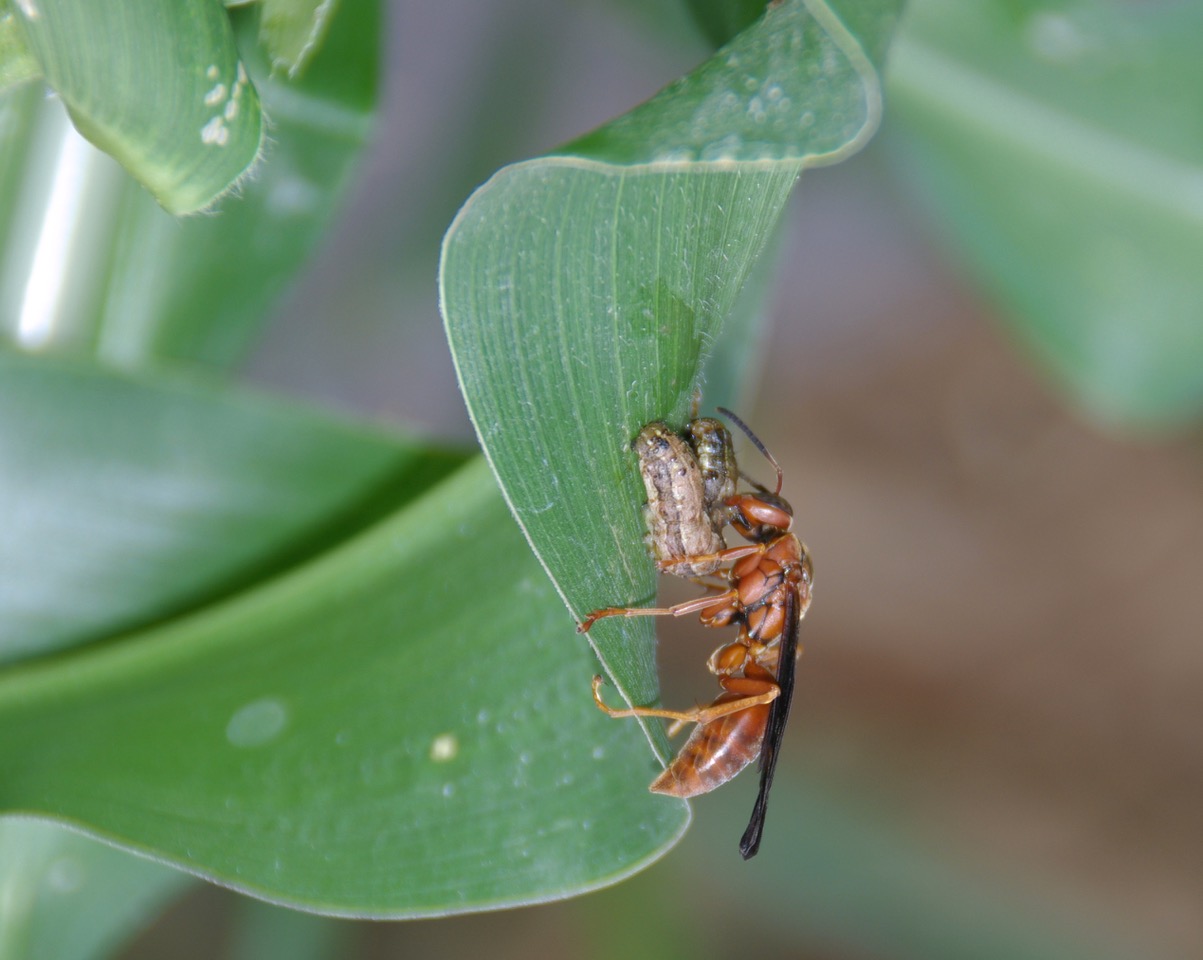
Red wasp eating caterpillar
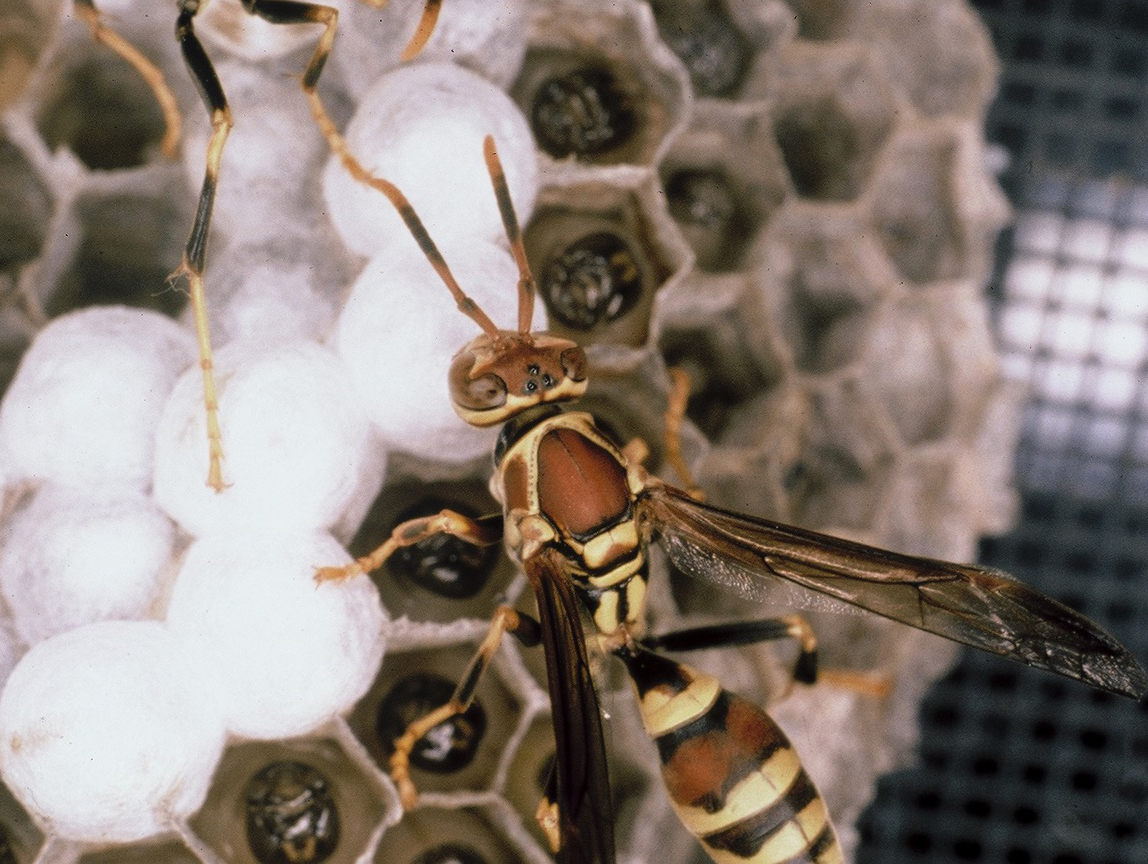
Paper wasp: non-aggressive and misidentified as yellowjacket
Next group of wasps are more dangerous but still beneficial – eating and feeding pest insects to their young. Here we have paper wasps, red wasps and other related wasps that will sting you. Paper wasps (incorrectly called yellowjackets) under the eave of your house are rarely aggressive. They will nail you if you bump into their nest – so don’t do that. They’re just protecting their young. Red wasps do the same but are more aggressive and the stings are more painful.
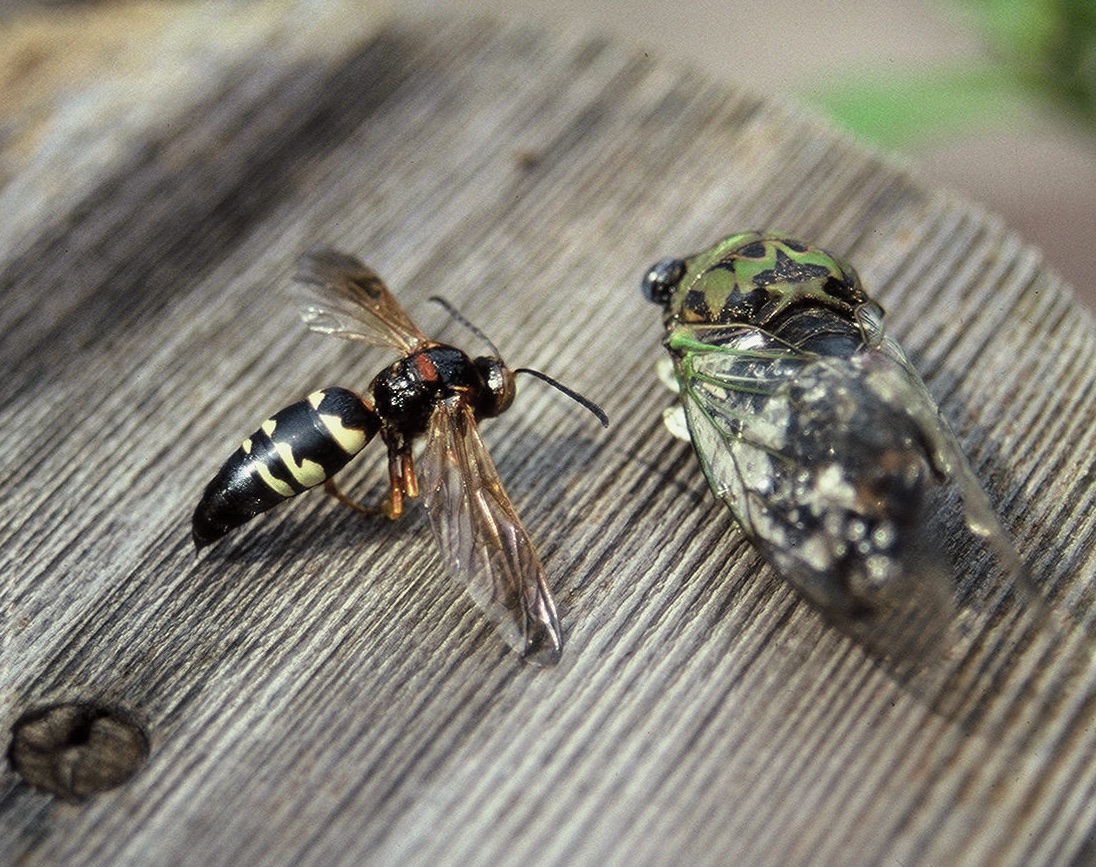
Cicada killer wasp (left) and cicada
The large menacing looking cicada killers are even less dangerous and have only been known to sting if grabbed – so don’t do that. Their flying around at knee level is just warning you to stay away from the hole in the ground that leads to their nest. It’s fun to watch them drag a big cicada into the hole to feed the young developing wasps.
The most dangerous of the wasps is the true Texas Yellowjacket. It’s an aggressive hornet that can hurt you. Nests are usually underground but they will build above ground at times. Strong advice here. Hire professionals to handle these guys. You don’t need the toxic stuff – soaps and essential oils products will kill them effectively.
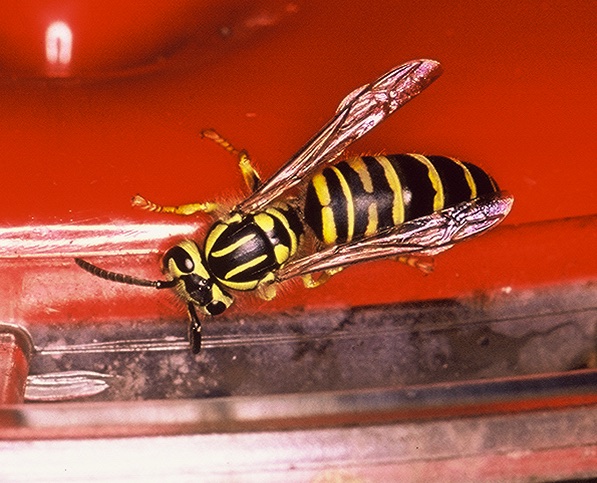
Texas yellowjacket: aggressive and dangerous
If the wasp nests have to be moved, use citrus garlic-pepper or essential oil sprays such as PureGro Bug Stop. These materials will repel or even kill without contaminating things. For aggressive bees, hornets and wasps use a mixture of orange oil, compost tea, molasses (Mound Drench). See organic GUIDES on dirtdoctor.com for the recipe.
You can learn more about all the friendly and dangerous wasps in the Texas Bug Book by Garrett and Beck.