

Smut Corn
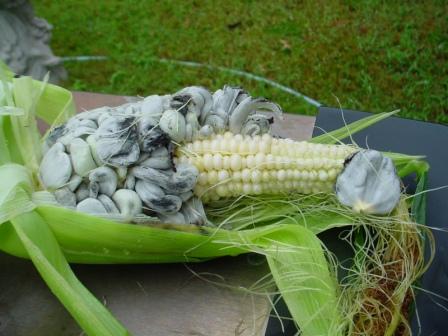
Considered a pest in most of the United States, smut feeds off the corn plant and decreases the yield. Usually smut-infected crops are destroyed. Some farmers may also choose to prepare corn silage out of the smutted corn. However, in Mexico corn smut is called huitlacoche, sometimes spelled cuitlacoche), a Nahuatl word reportedly meaning raven’s excrement. It is considered a delicacy, even being preserved and sold for a higher price than corn. For culinary use, the galls are harvested while still immature — fully mature galls are dry and almost entirely spore-filled. The immature galls, gathered two to three weeks after an ear of corn is infected, still retain moisture and, when cooked, have a flavor described as mushroom-like, sweet, savory, woody, and earthy. Flavor compounds include sotolon and vanillin, as well as the sugar glucose.
Question: I found this ear of corn in my garden and I am not sure what could have caused this. All of the rest of the ears are growing normally. This is the first time I have grown corn but I have been organic sense the 80’s thanks to you. — J.K., Fort Worth, TX
Answer: You have a fungus that is also considered a delicacy. Corn smut is called huitlacoche and sometimes spelled cuitlacoche). It is often preserved and sold for a higher price than corn. For culinary use, the galls are harvested while still immature. Mature galls are dry and almost entirely spore-filled. The immature galls are edible. They are gathered two to three weeks after infection is seen. They are moist and have mushroom-like texture and flavor. If you don’t want to deal with it, just throw those ears away.
Fungal diseases are common to grasses, grains, and corn. Corn smut attacks kernels, tassels, stalks, and leaves. Smut galls ripen, rupture and release spores through the air to infect other plants and overwinter in the soil. Select resistant cultivars, remove and compost galls before they break open and rotate crops. Spray Bio Wash (to clean plants) as preventative.