

Sphinx Moth
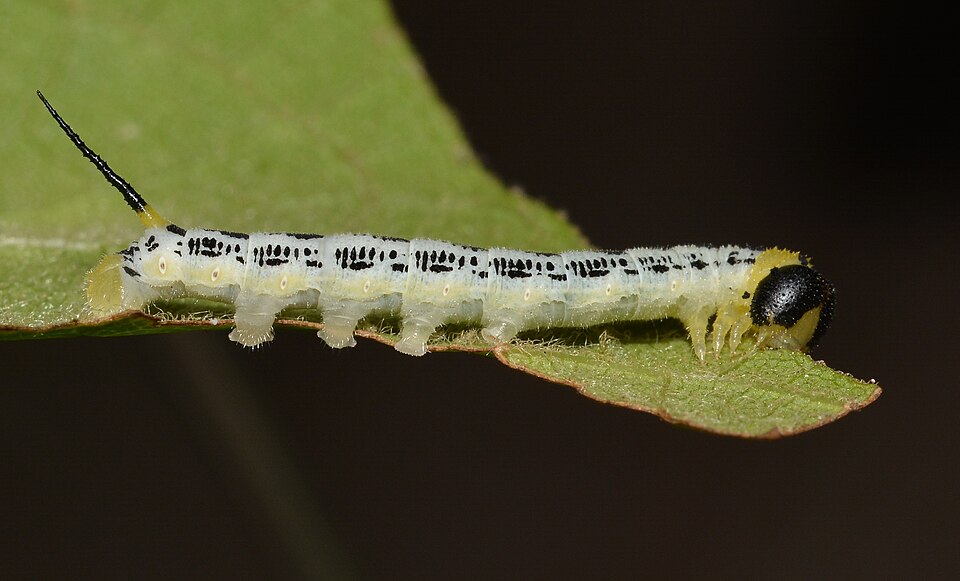
Caterpillar of Catalpa Sphinx Moth (from Wikimedia)
COMMON NAMES: Catalpa Worm, Sphinx Moth, Catalpa Sphinx, Hornworm
SCIENTIFIC NAME: Order Lepidoptera, family Sphingidae, Ceratomia catalpae and various others
SIZE: Adult wingspan—2 1/2″ to 3″, pupa—2″ to 3″, larva—up to 3″
IDENTIFICATION: The larvae are large with a sharp horn at the tip of the abdomen. Larvae have a black streak down their back and are slimmer than the tobacco or tomato hornworms.
BIOLOGY AND LIFE CYCLE: Pupae pass the winter under the soil. Adults emerge soon after catalpa trees are in full leaf. The moths are rarely seen because they fly at night. They are attracted to security lights. Usually two generations per season.
HABIT: In, under, and within close proximity of catalpa trees. Other worms such as the tobacco hornworm life in nightshade plants such as tomatoes, potatoes, eggplant, and peppers.
FEEDING HABITS: Leaves of catalpa and closely related trees such as chitalpa.
ECONOMIC IMPORTANCE: Serious pest on catalpa trees but terrific fishing bait. On tomatoes and other plants they can take a lot of foliage off if there are a bunch of worms on individual plants.
NATURAL CONTROL: Parasitic wasps, birds.
ORGANIC CONTROL: Release of trichogramma wasps and Bacillus thuringiensis spray as a last resort.
INSIGHT: The adults are big beautiful sphinx moths that are important pollinators; the larva is also quite beautiful. See other insects such as Tobacco Hornworm, Tersa Moth, etc. for more about the moths in this family.
.jpg)
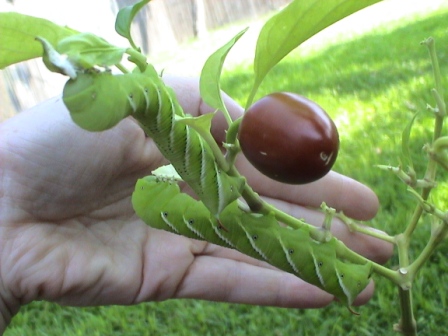
Tobacco hornworm stages, as the hungry hungry caterpillar (left, photo by Sandy Holmes)
and as the pupa ready to winter over in the soil (photo by Maggie Dwyer).