
Organic Answers Column – March 16, 2022
Synthetic Fertilizers Have Several Negative Points
My listeners and readers are often surprised that I consider using the wrong fertilizers more of a problem than the use of toxic chemical pesticides. High-nitrogen synthetic fertilizers hurt the main things we are trying to improve – the life in and the health of the soil.
.jpeg) Root growth difference in potatoes, between healthy soil (right) and not healthy |
Artificial salt fertilizers do damage each time they are applied as they volatilize and cause air pollution, wash or leach away with rains and irrigation to contaminate the water stream, and damage microorganisms in the soil. Many of them also have toxic fillers.
Organic fertilizers, on the other hand, work better in every way. They don’t volatilize into air pollution or wash away easily, but there’s more. Organic fertilizers are gentle and build the health of the soil with every application. The volume of organic fertilizer needed actually goes down with time, while with synthetic fertilizers more and more is needed. Plants under organic fertility have larger and stronger root systems and are much more efficient at getting the proper nutrients, trace minerals, enzymes and microbes into the plants. As a result, plants have more complex carbohydrates thus less stress, fewer pest problems, and better taste in food crops. Another great advantage of organic fertility is an approximate 40 – 50% reduction in irrigation needs. Plus, organic gardening is just more fun.
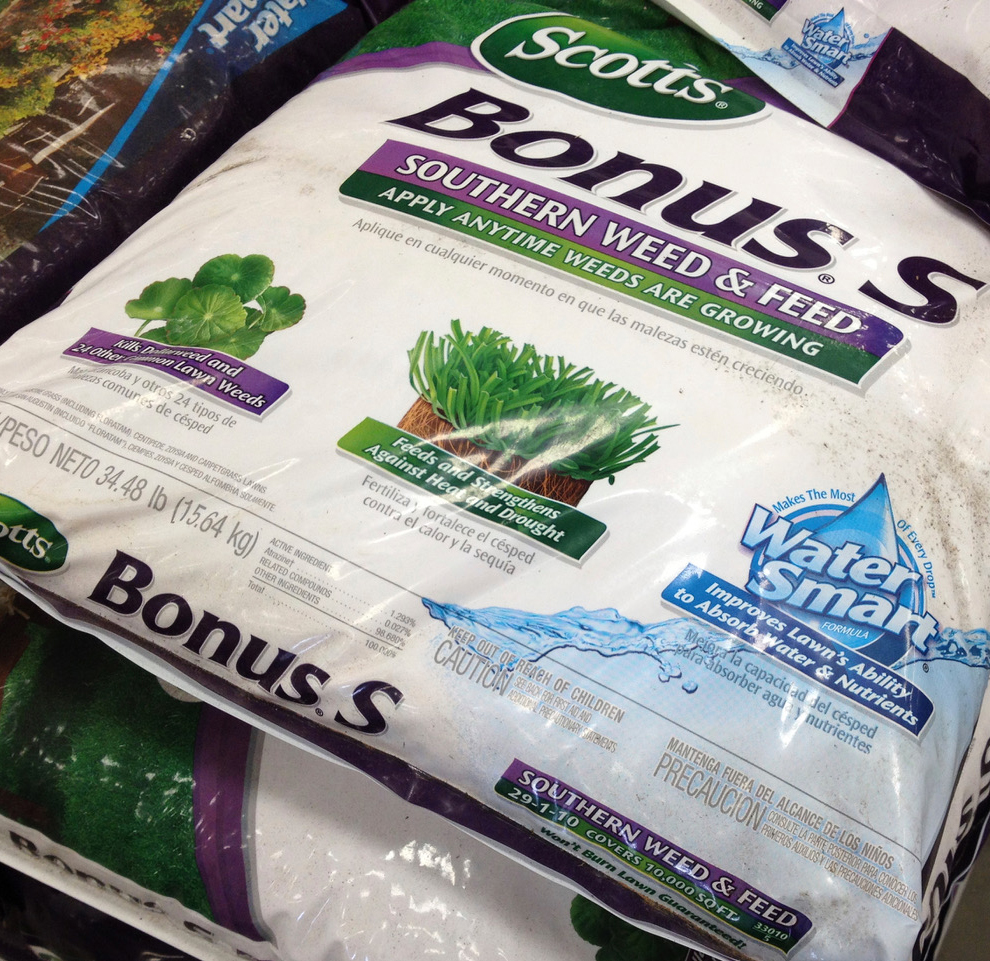 The “weed and feed” products are the worst choices – but there are others. |
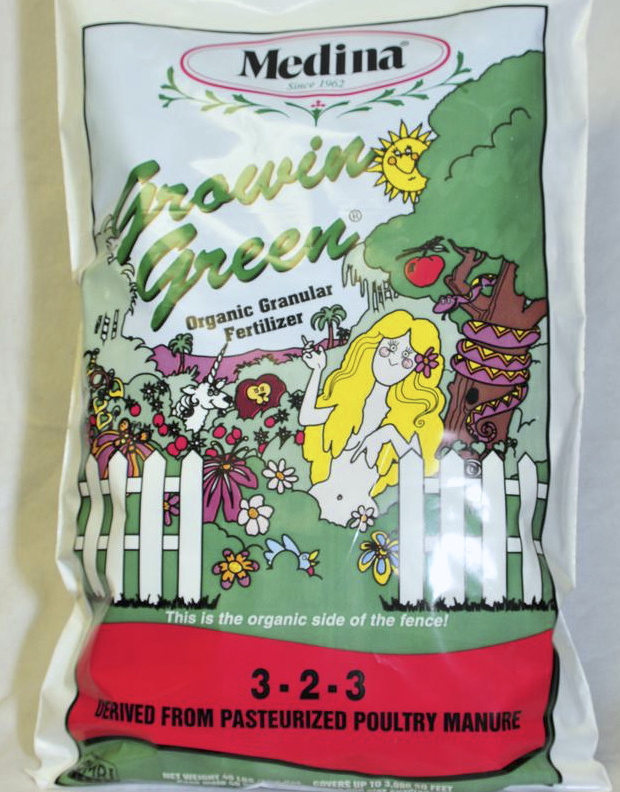 Here is one of the best organic choices. Quality organic fertilizers, like Medina’s Growin Green, work better in every way |
The “weed and feed” fertilizers are the worst. Some contain atrazine, a toxic chemical herbicide that will damage or kill your trees and shrubs. Others contain 2,4-D and other toxic herbicides. Even the chemical boys agree that these products are bad. They have no problem with synthetic fertilizers or herbicides, but they agree that the “weed and feed” ingredients aren’t suitable to be applied at the same time. The pre-emergent herbicide needs to be applied about 2 months earlier than the soluble fertilizer. They also agree that atrazine should not be used at all.
In second place for bad synthetic fertilizers are the nitrogen-only products such as 23-0-0. Not much can be done that will do more damage by fouling up the soil chemistry than single element fertilizers.
The Bronze bad medal goes to that group of high-nitrogen choices like the 3-1-2 or 4-1-2 ratios types. These high-nitrogen salt products are bad for plants, the soil, the water and the environment in general. Synthetic fertilizers are incomplete, unbalanced, often contain contaminants, have no carbon energy, contain far too much nitrogen and have few trace minerals.
.jpeg) Organic fertilizers go out from the same spreaders that are used for the synthetic stuff |
Natural organic fertilizers contain naturally buffered, slow release blends of major nutrients, trace minerals, organic matter and carbon. They have lots of beneficial life and stimulate more of it in the soil – and most importantly – they contain nothing that will damage the soil’s biological activity or the roots of your plants.
Don’t get me wrong. I’m still strongly opposed to the toxic chemical pesticides especially Roundup, 2,4-D, dicamba and the other commonly used products – but the synthetic fertilizers are worse and should be eliminated first.
To start being an organic gardener, farmer or rancher, use these first 3 steps.  |
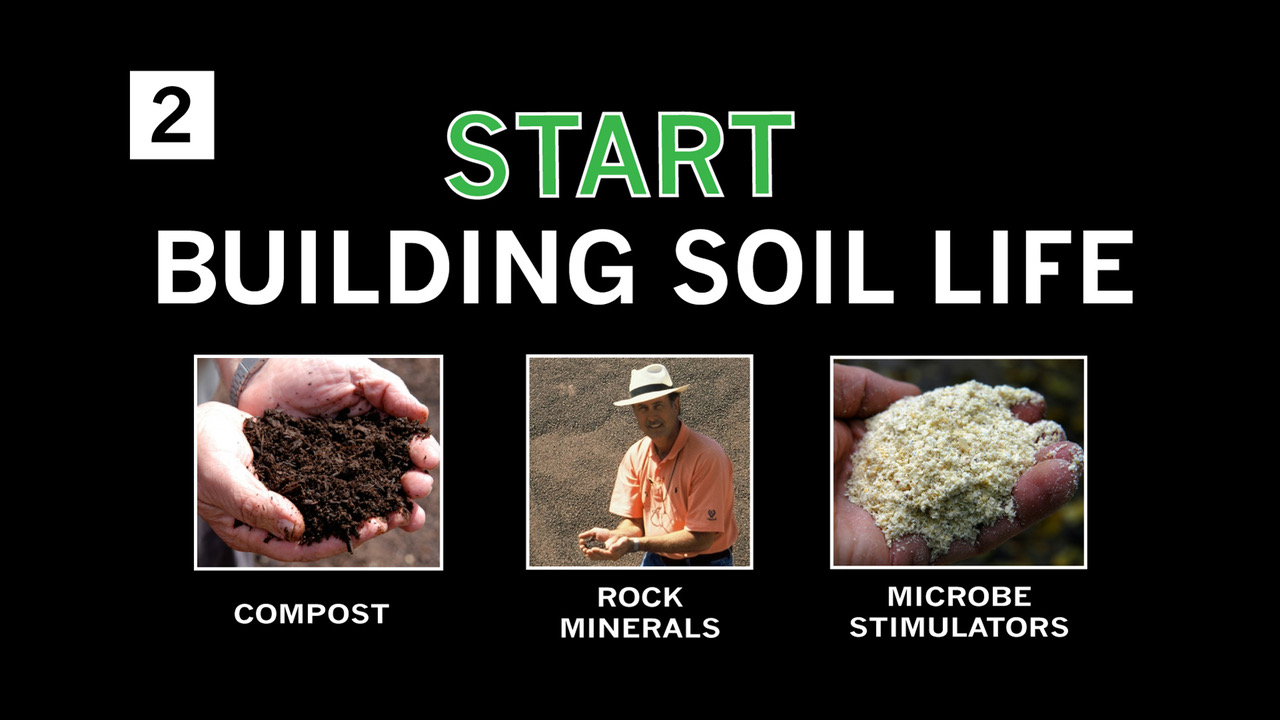 |
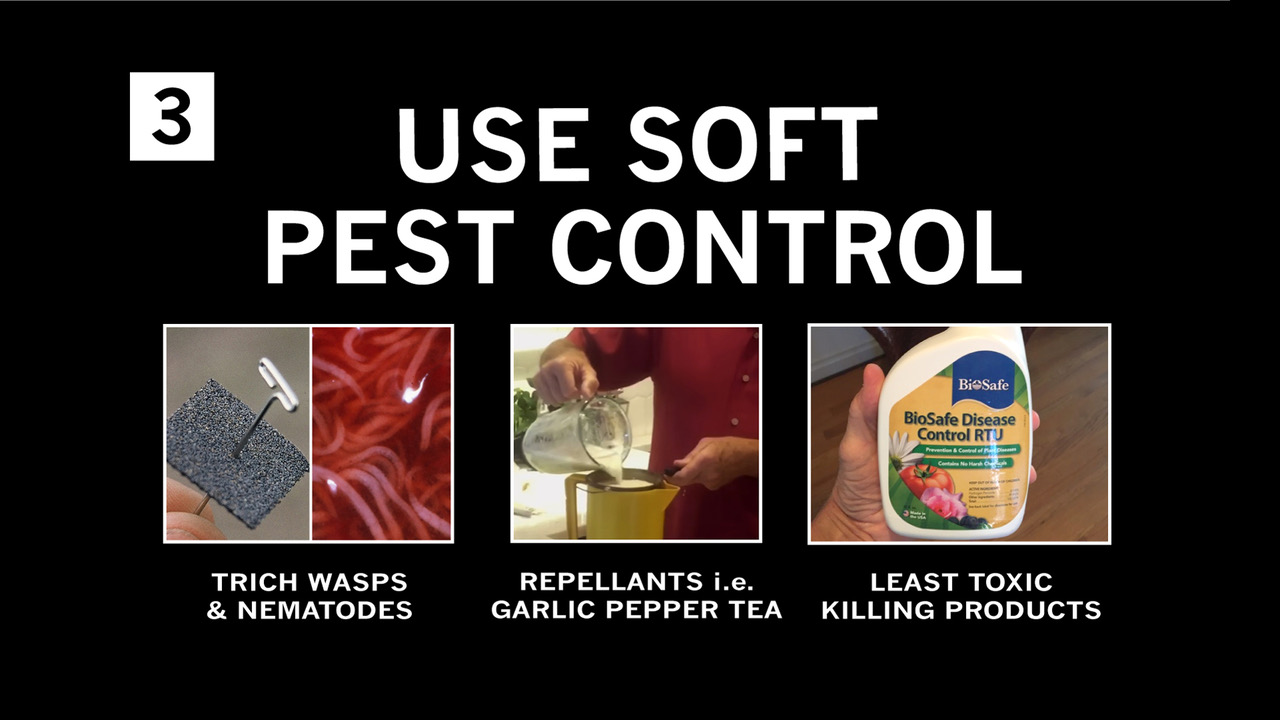 |