

Organic Answers – October 26, 2022 – Coral Vine
To Plant or Not: Coral Vine is a Xeriscape Plant that can become Invasive
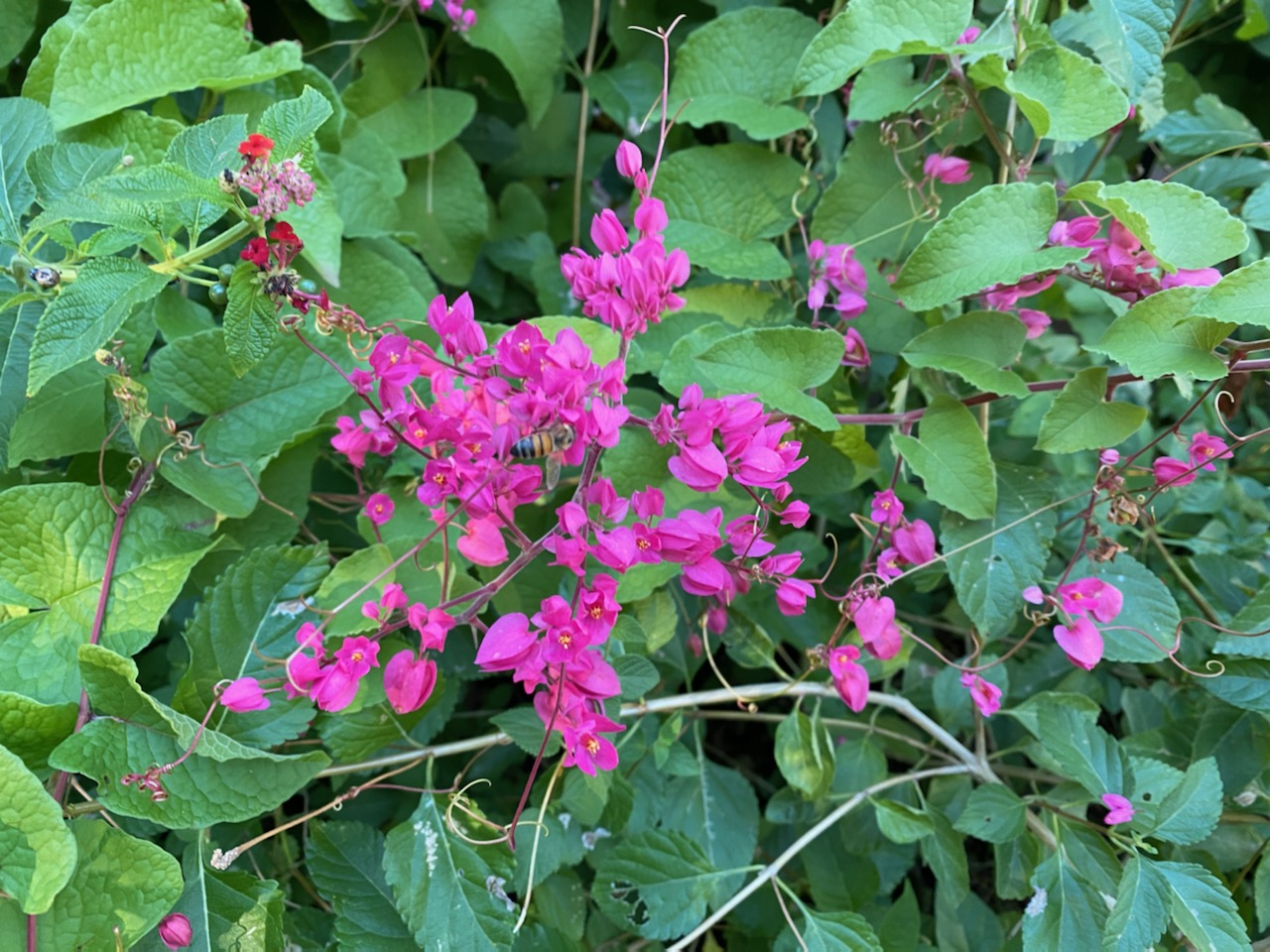
Coral Vine is in the Polygonacea or Buckwheat family, and is a fast-growing vine that in North Texas generally dies back to the ground every winter. There are three colors: pink, red, and white, and the pink seems to be the most cold hardy, especially north of USDA Hardiness Zone 8. In frost-free climates the vine is evergreen. Other names include Bee Bush, Mexican Creeper, Queen’s Wreath, Hearts-on-a-chain, Heavenly Vine, Coralita, and San Miguelito Vine.
Plant this deciduous (in North Texas and north of Zone 8) vine in direct sun or partial shade, spacing plants five to 10 feet apart, and keep in mind they can climb 20 to 30 feet and spread as much as 20 feet. One plant may be enough.
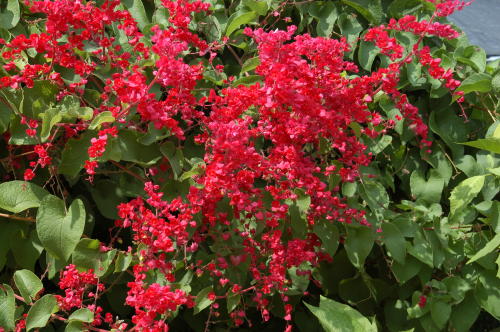
Easy to grow in most soils, Coral Vine is a drought-resistant native of Mexico and Guatemala. Xeriscape plantings are intended to look good in hotter and/or drier climates, thriving on low water once they are established. In Texas, the vine is considered invasive in such warm areas as the Rio Grande Valley. And this is where the home gardener must make the choice: plant this lovely fast growing vine because it will withstand the dry summer, or avoid this one in case it becomes so established that it begins to take over if it can survive the winters.
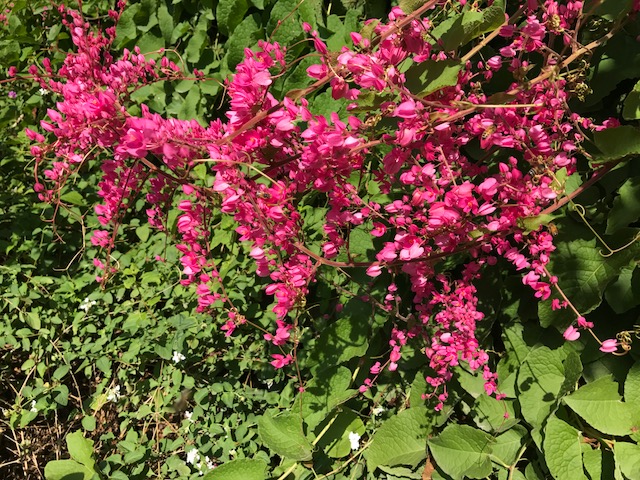
Coral Vine is excellent for wildlife. Homeowners who have decided to stop putting out birdseed (that attracts rats and mice) are instead planting as many plants as possible that will attract birds, butterflies and other pollinators and other beneficial insects. That and the organic program are the keys to biodiversity. Large masses of single species are much less effective in attracting wildlife than mixtures of plants with varying textures, colors, times of bloom, fragrances and overall size of plants. Variety in plants is directly related to variety in wildlife, and coral vine can be part of that landscape plan.
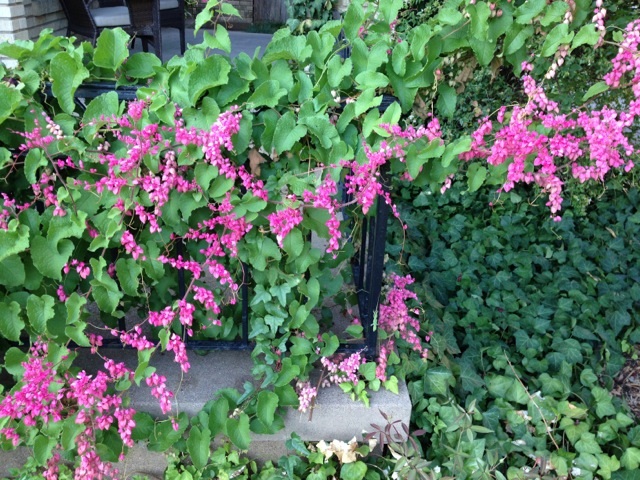
Problems for this beautiful vine have to do with cold weather. It freezes to the ground in most of Texas. The climate will keep this plant under control, but as freeze days shift (NOAA researchers maps show that we have a shorter freeze season by about a week now) be aware that it may shift to be an aggressive pest like Trumpet Vine or, in areas to our east, Kudzu.