Dallas Morning News – April 16, 2020
Turfgrass Disease Issues
Let’s switch from vegetable garden talk to landscaping today to discuss diseases in the lawn. There’s a lot of disease showing up in the turfgrasses right now. One of the reasons is all the rain we have had recently. Unfortunately, some homeowners have made it worse by leaving their sprinkler systems on automatic and continuing to needlessly run.
Many of the disease show up as small circles growing into larger blob shapes with definite edges. Most of these pathogens are fungal and can include Rhizoctonia (Brown Patch), Fusarium, Pythium, Gray Leaf Spot, Dollar Spot, Rust and others. All of these diseases can be controlled with the same solution I’m about to give you for control of the commonly appearing Take All Patch or Take All Root Rot, technically known now as Gaeumannomyces graminis var. graminis. It primarily attacks St. Augustine, but can also invade zoysias and other grasses.
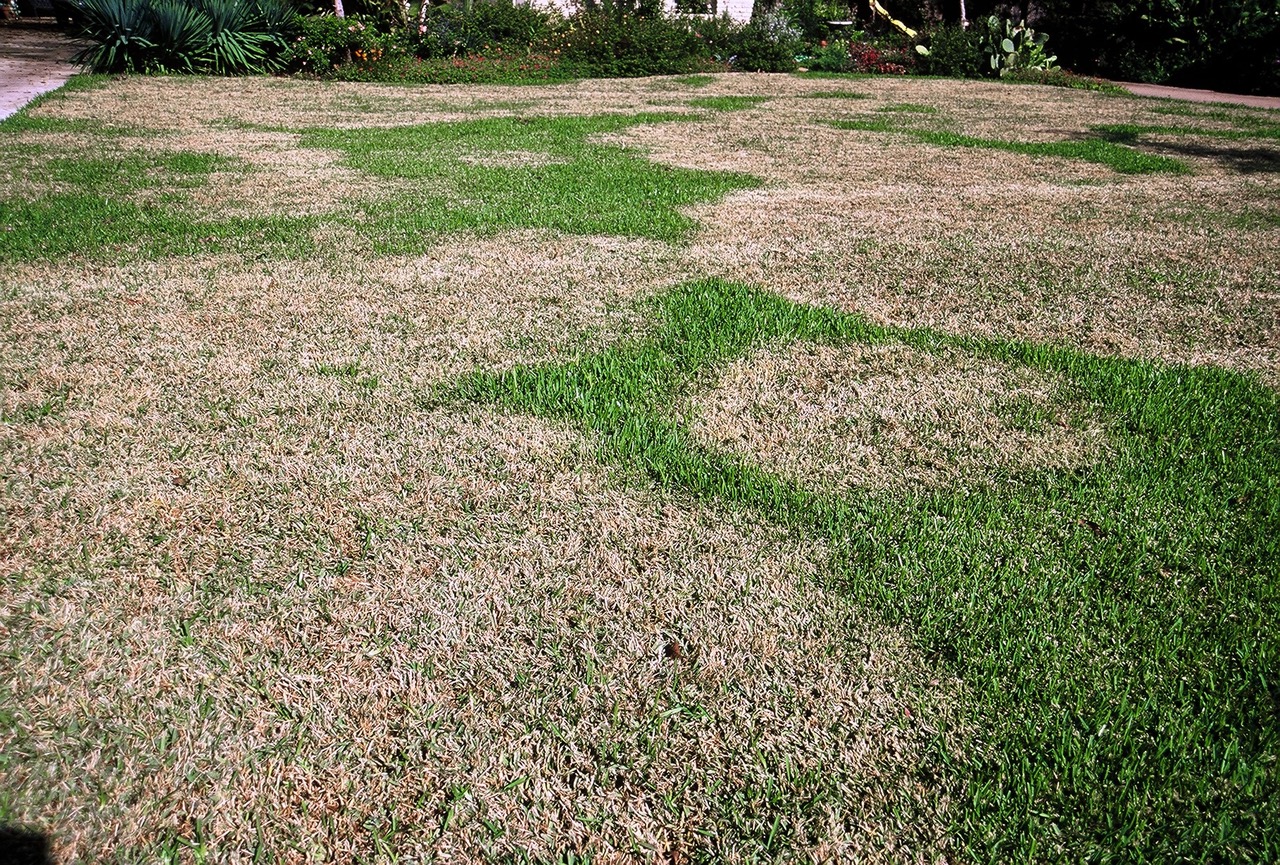 Brown patch in St. Augustine grass |
Universities that study turf problems use to recommend applying peat moss for Take-All infested lawns but they are now saying the best remedy is applications of the fungicide Azoxystrobin. It is most commonly sold as Scott’s Disease EX. Don’t know why the change from peat moss to this chemical, but grant money seems to be involved.
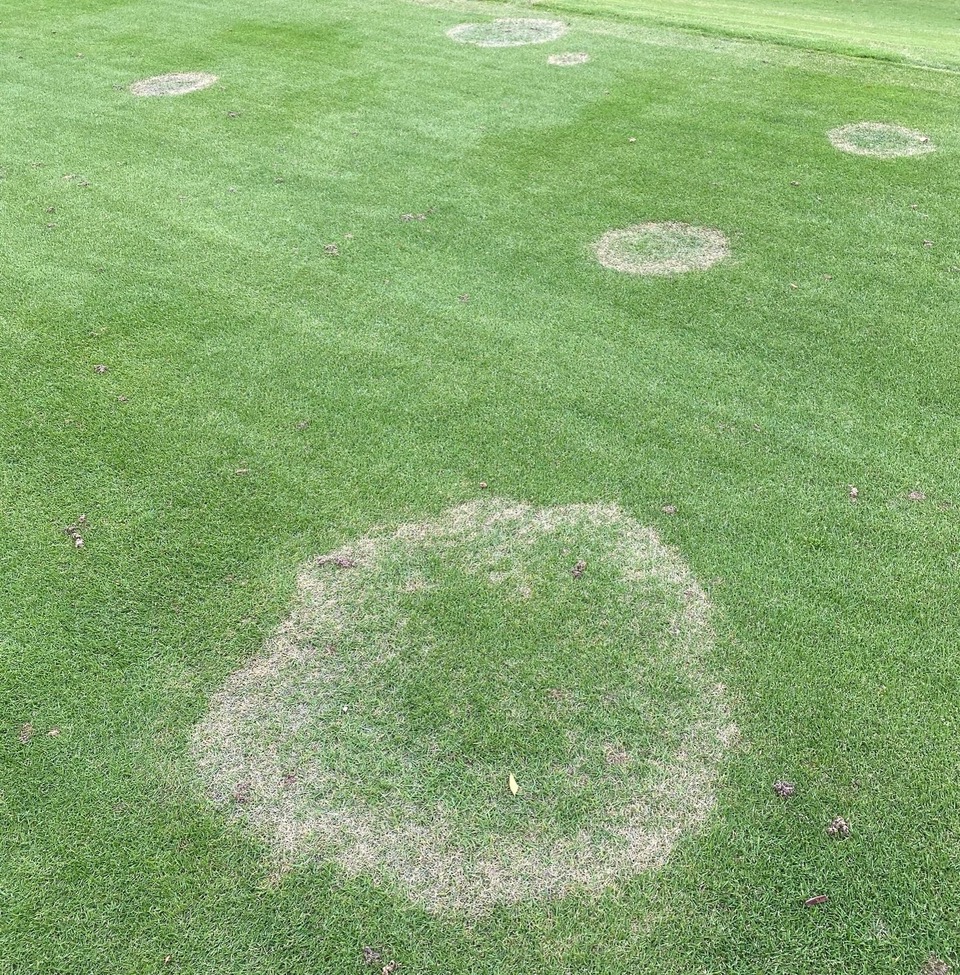 Fungus in zoysia turf grass |
I don’t recommend peat moss or the use of Azoxostrobin. Nor do I recommend Daconil, Bayleton or any other chemical fungicide. It’s not that you or your pets will drop dead from being exposed to these fungicides. The problem is that these products indiscriminately kill microbes – and not just pathogens. My concern is not just beneficial soil microbes (although an important issue), but also beneficial life in the gut of wildlife, livestock, pets, you and me. Keeping animal and human immune systems healthy is more important today than ever before and the organic methods can certainly help.
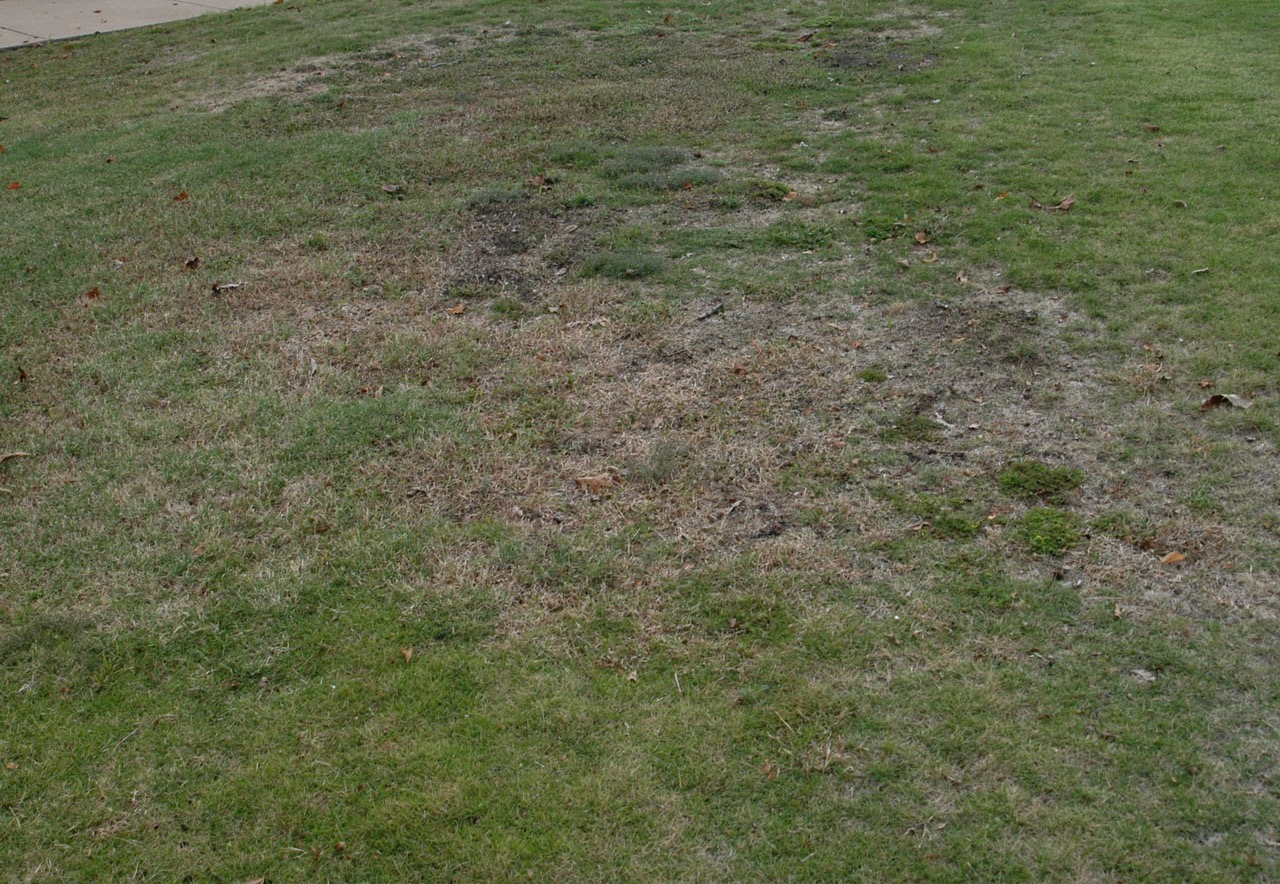 Take-All Patch or Take-All Root Rot |
To control all these turf diseases the natural way, drop the use of high-nitrogen, synthetic, salt fertilizers (the commonly sold stuff), water deeply and then wait as long as possible before watering again, leave the grass clippings on the turf and apply whole ground cornmeal at 20 lbs. per 1000 sq. ft. It will flow through a regular broadcast-type fertilizer spreader easily. Cornmeal of course isn’t toxic and it doesn’t kill microbes. Instead it stimulates a beneficial fungus called Trichoderma that overpowers the pathogens and brings them into natural control. Research is underway to create lab-produced products that provide and stimulate Trichoderma, but that’s unnecessary. Cornmeal does it just fine.
Next week we will review the food crop diseases and solutions in detail – but the Dirt Doctor short answer is to avoid high nitrogen fertilizers and toxic disease control products like Daconil and use both hydrogen peroxide sprays and cornmeal to prevent and cure the relatively few diseases that might pester your organically grown veggies, herbs and fruits.