

Dallas Morning News – May 10, 2018
TWO IMPORTANT INSECTS TO PROTECT AND KILL
There are two insects that are easy to confuse but it’s important to keep them straight. One is a dangerous stinging pest, the other is a beneficial insect that eats pest insects.
_-_the_larvae_of_flannel_moths.jpeg)
Puss caterpillars (asps) – the larvae of flannel moths
Puss caterpillars (also called asps) are the larvae of flannel moths. The name puss caterpillar comes from the pretty hairdo that resembles a pussycat’s fur. The adult moths and the larvae are pretty, but watch out! The pretty fur that can be several colors conceals a serious and dangerous sting that comes from hollow spines hidden by the soft fur. The most common way people get stung is when the larvae fall out of trees or bushes and down the back of shirts. Yowie! These insects are definitely pests and need to be controlled with Trichogramma wasps released in the spring or sprays of Bacillus thuringiensis or spinosad products. The Bt products will only kill moths and butterflies but the spinosad products kill most insects. Be care with the use of both.
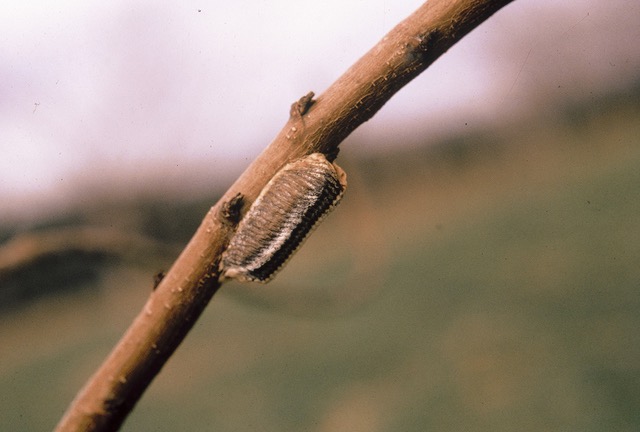
Unhatched native praying mantis egg casing
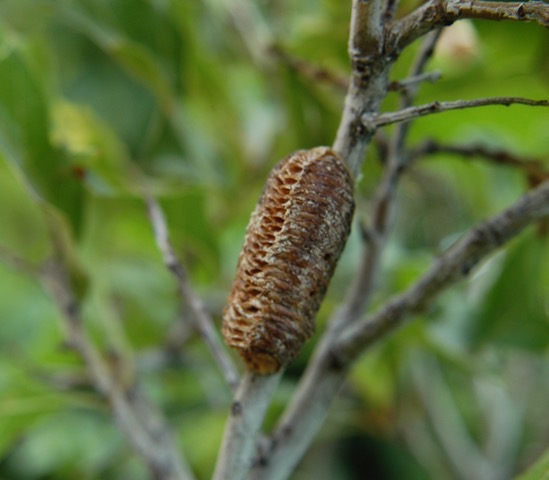
Hatched native praying mantis egg casing
The egg casings of the other insect look similar at a quick glance but are the temporary housing for many baby beneficial insects and of course should not be harmed. Often mistaken for puss caterpillars are the egg casings of praying mantids.

Egg casing of the native praying mantis

Egg casings of the Chinese praying mantis
There are two different kinds. The Carolina mantis (
Stagmomantis carolina
) is native. These gray and brown camouflaged adult mantids are smaller and less showy than the larger and usually green Chinese mantids. The native egg casing is elongated and more slender. You can tell when they have hatched from the open slits that appear like tiny lovers.
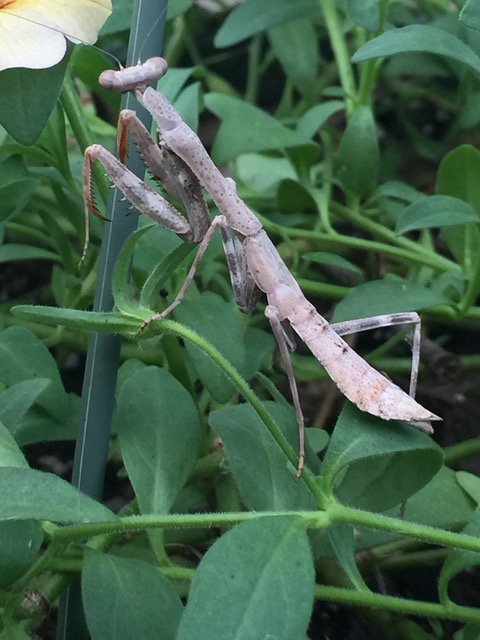
Native praying mantis adult
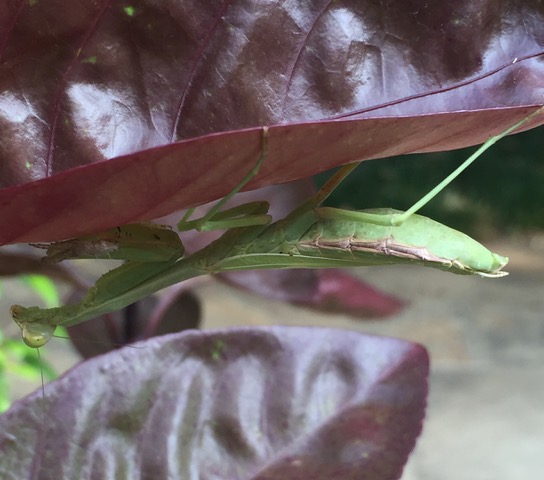
Chinese praying mantis adult
The larger Chinese mantids (
Tenodera sinensis
) have been naturalized in the USA since at least 1895. Their colors range from brown (with a green wing stripe) to solid, bright green. Their egg casings (oothecas) are a little smaller than ping pong balls, light tan in color and fairly round. The front of these casings will also have the open slits that lets you know that approximately 200 eggs have already hatched and moved on. It doesn’t hurt to damage the egg casings at this point because they will not be used again. Before the slits are open the solid casings of both the Chinese and the native friends are viable so disturbing or destroying them will hurt or kill the eggs or young praying mantids.
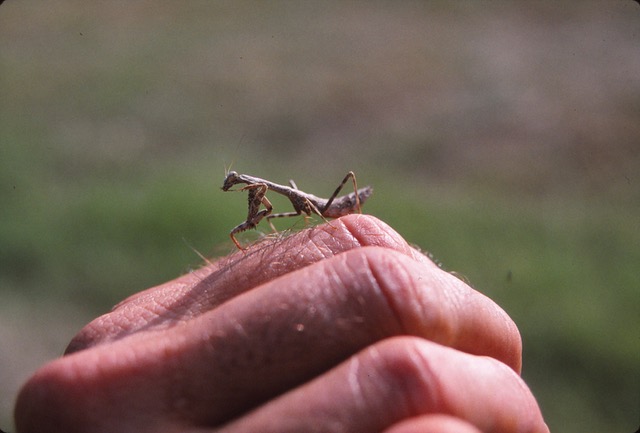
Native praying mantis adult
For more information on the management information about these two important insects, see the Library entries in dirtdoctor.com.
Home | Return to Archives