

Dallas Morning News – November 30, 2017
Vinegar and Its Benefits

10% white vinegar used to make my herbicide mix.
Vinegar comes in several strengths and formulations and all forms have important uses – if the right vinegar is chosen for the specific use. For starters, I drink some vinegar every day. For this internal use I mix about ½ ounce in water and other drinks daily. My favorite time is in the morning but others prefer it in the evening as part of a nighttime tonic. For internal use, organic apple cider vinegar (5% product concentration) should be used. I also use it full strength as a rinse after showering. Your skin feels great and it seems to help relieve skin blemishes, rashes and the like.

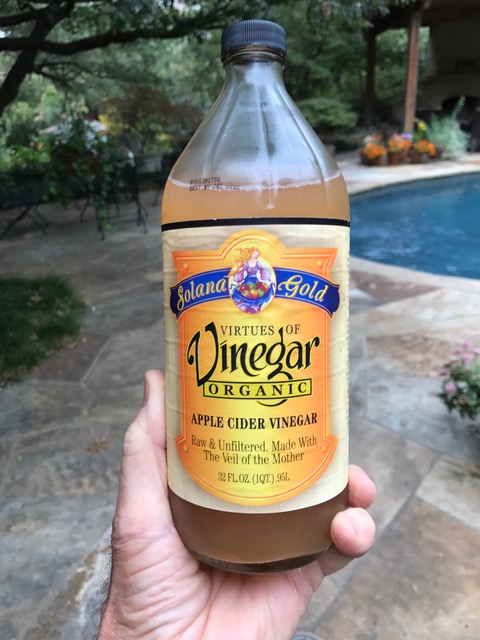
Apple cider vinegar has food and topical applications.
Organic apple cider vinegar that’s used on food and taken internally.
Apple cider vinegar is also quite helpful as a key ingredient in foliar sprays and soil drenches. Being organic is not critical for this use. Whether the liquid tool you are using is seaweed, liquid fish, the entire Garrett Juice formula or any other mixture, vinegar not only provides bio-available trace minerals but also helps the synergy of the mix and makes the individual ingredients more effective. My favorite mixture is easy to make at home and you’ll find it highly beneficial to all plants including interior plants like orchids. It is 1 cup of compost tea or liquid humate and 1 ounce each of liquid seaweed, molasses, apple cider vinegar and liquid fish. That by the way is Garrett Juice.

20% vinegar product that is labeled for organic weed control.
Killing weeds can also be done with vinegar. There are a few options. The homemade mix that I find best is 1 gallon of 8-10% white vinegar with an ounce of orange oil added. Some gardeners like to use 20% vinegar and more like 2 ounces of orange oil along with a tablespoon of liquid soap. It’s best to avoid products that are made from 99% glacial acetic acid. This is often a petroleum-based product. 20% vinegar products that are made by fermenting grain alcohol are perfectly acceptable but may be stronger than you need. The one exception is a 20% vinegar product that is labeled properly for organic weed control. It is available in garden centers and farm stores under at least three different brand names when proper labels are more important than saving money with home brews. Remember that vinegar herbicide of any kind is non-selective and needs to be carefully sprayed on weeds to avoid damaging good plants. There’s one exception to that. When the summer turfgrasses are dormant, the entire lawn can be sprayed with vinegar herbicides and other organic herbicides such as fatty acid and hydrogen peroxide products that kill the young winter weeds without hurting the turfgrasses.
For more detailed information about this wonderful tool for gardeners, see the