
Dallas Morning News – July 16, 2020
Virginia Creeper Follow-up Story
I received a strong criticism from a reader who was not happy with my comment in a column that Virginia creeper is harmless. She declared that it would cause a horrible rash just like poison ivy does. So – I dove into some research, especially interested since I literally contact this almost daily. I have large plantings at home and in my office experimental gardens.
 Virginia creeper as a groundcover |
Most publications either ignore the point or say that Virginia creeper doesn’t contain rash-causing oil like poison ivy. The strongest statement I could find was that Virginia creeper can cause a rash for some people but not nearly as many people as poison ivy and not as severe. Several publications said that although not as allergenic as poison ivy, the sap of Virginia creeper could cause skin irritation and blisters in sensitive people especially when it punctures the skin.
 Virginia creeper has good and bad points |
However, Virginia creeper has other dangers. It can be very harmful if chewed or swallowed, causing mouth pain, nausea, vomiting and diarrhea and should not be eaten.
According to the Illustrated Flora of North Central Texas “This species [Virginia creeper] does not cause contact dermatitis, sometimes falsely accused because of its association in the same habitat (sometimes on the same tree) as POISON IVY, however the berries are suspected of being lethally poisonous to children and the tissues of the plant are known to contain microscopic, irritating, needle-like crystals . . . “
 Virginia creeper in fall starting to change color and showing the dangerous fruit |
The berries of the Virginia creeper resemble small purple grapes and contain tiny crystals called oxalate crystals. These crystals are also in the leaves of Virginia creeper. Chewing the leaves or berries can cause irritation to the lips, mouth, tongue, and throat. Although rare, nausea, vomiting, diarrhea and difficulty swallowing have been reported after ingesting. The symptoms generally develop quickly and can last for up to half a day.
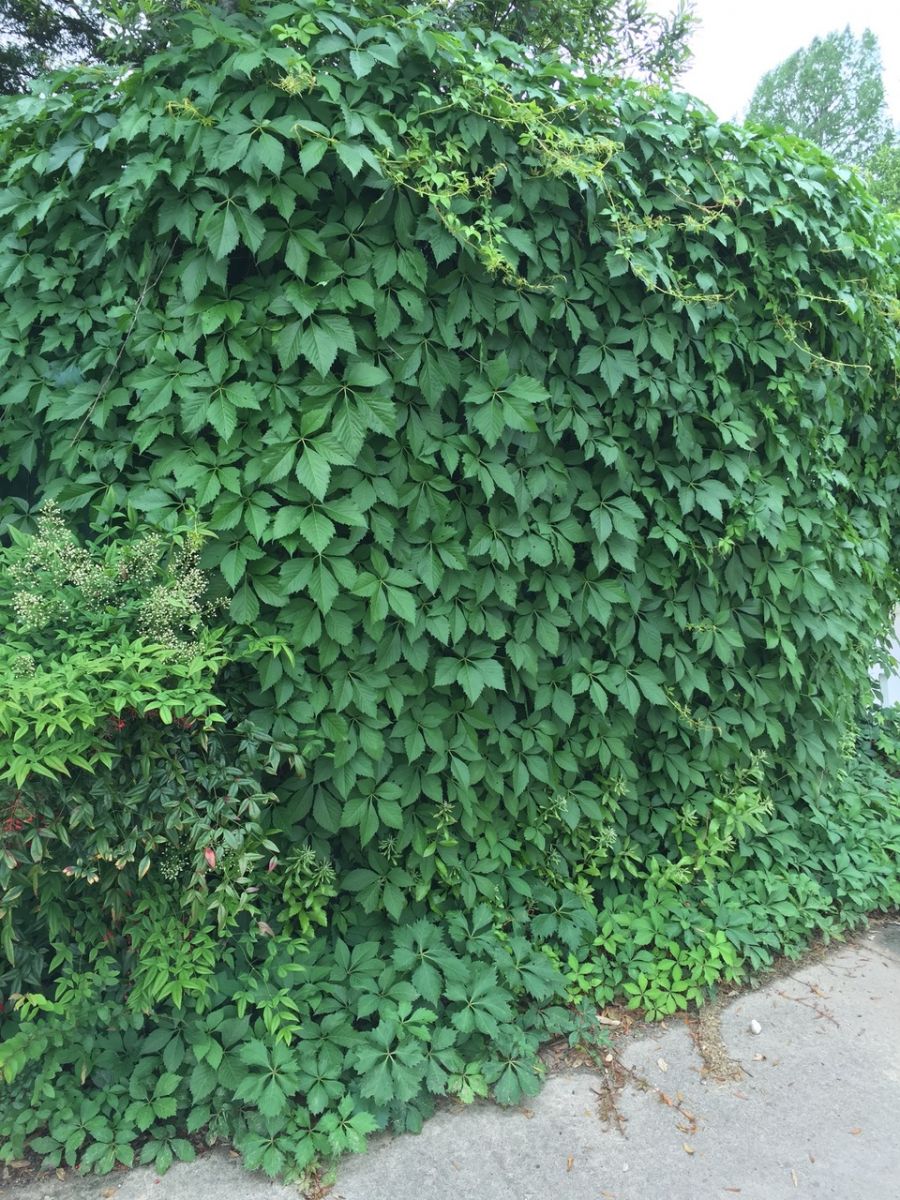 V. creeper is an aggressive vine |
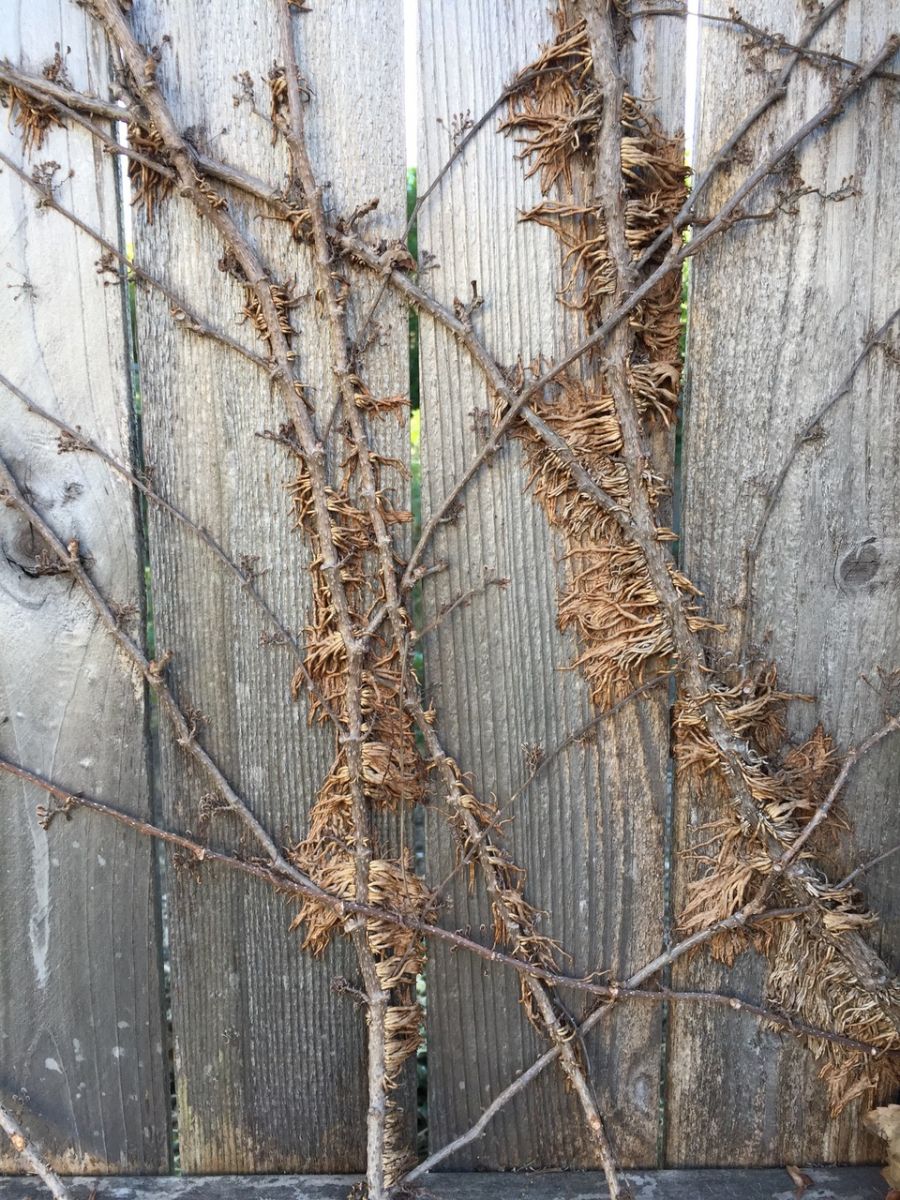 V. creeper’s tendrils can be damaging as it climbs |
During my research, I also looked more deeply into other so-called “toxic” vines starting with wisteria but also including Carolina jessamine, clematis and trumpet vine. Yes, they all have varying degrees of “toxicity.” So does oleander (highly toxic), daffodil, hyacinth, caster bean, larkspur, lily of the valley, azalea, jimsonweed and oak. And there are many more.
In conclusion, Virginia creeper may or may not give you a rash – it certainly doesn’t me. But – do not eat Virginia creeper, especially the berries or any other plant in the garden or in the wild unless it is absolutely proven and known to be an eatable and safe plant. Even then some people are allergic to certain proven food crops. Teaching children this valuable lesson is critical.
If you suspect someone has been exposed to a toxic plant and is having a problem, contact Poison Control right away. Help is available online with webPOISONCONTROL, poison.org or by phone at 1-800-222-1222. These options are free, expert and confidential.