
Organic Answers Column – May 31, 2023 – Neem
Neem Questions Create Need for Update
Neem is a botanical pest control product that is made from the seed of the tropical neem tree of India and Burma. There are pros and cons.
Neem Azadirachta indica, is a tree in the mahogany family Meliaceae. It is the only species in the genus Azadirachta, and is native to India and Burma but will grow in tropical and semi-tropical regions. It is kin to mahogany and chinaberry and thrives in poor soil.

Oil extracts from this evergreen tree come from bark,
leaves, and fruit
It is a fast growing evergreen tree that can reach a height of 50 – 60 ft that under severe drought conditions may shed most or nearly all of its leaves. Branches are wide spread.
The trunk is relatively short and straight and the bark is hard, fissured or scaly, and whitish-grey to reddish-brown. Neem sapwood is greyish-white and the heartwood reddish when first exposed to the air, becoming reddish-brown after exposure. The root system consists of a strong taproot when young and well developed lateral roots. Neem flowers are large, white and fragrant. The fruit is similar in size and shape to an olive.
This plant is more than a tough tree that grows vigorously in difficult sites. Among neem’s many benefits is the use for control of farm and household pests. It is considered acceptable for use in organic programs. It is not a systemic insecticide as a foliar spray, however, it is said to have a long lasting systemic insecticide when used as a soil drench. Extracts of the bitter seeds and leaves are used as a natural pesticide. It is harmless to humans, animals, and beneficial insects. Pests are unable to build up a genetic resistance which will affect its potency.
Neem extracts, such as from the bark (in this instance), can prevent tooth decay, as well as, prevent and heal inflammation of the gums and has been added as an active ingredient in several popular toothpastes. Neem is antibacterial, works as a fungicide, and is antiviral. Neem contains a compound called salannin which biting insects hate and is said to be more effective at repelling biting insects than the synthetic chemical “deet.” Neem extracts don’t instantly kill pests.
The active ingredient is azadirachtin, which works by preventing molting, suppressing feeding or repelling, depending on the insect. It does not harm humans, birds, plants, earthworms, or beneficial insects.
Registered for use on both ornamentals and food crops, neem works against aphids, whiteflies, thrips, hornworms, mealybugs, leafminers, gypsy moths, weevils, webworms, loopers, psyllids and sawflies. Tests conducted by the USDA show neem extracts repel cucumber beetles for up to 6 weeks.
Neem is most effective against insects which pass through all stages of metamorphosis. Neem oil is a thick, “fatty” oil, with a very strong odor. It does not harm humans, so can be used for conditions such as head lice. The oil is rich in oleic acid, palmitic acid, stearic acid, linoleic acid and arachidic acid and is very moisturizing so can be used on psoriasis and eczema.
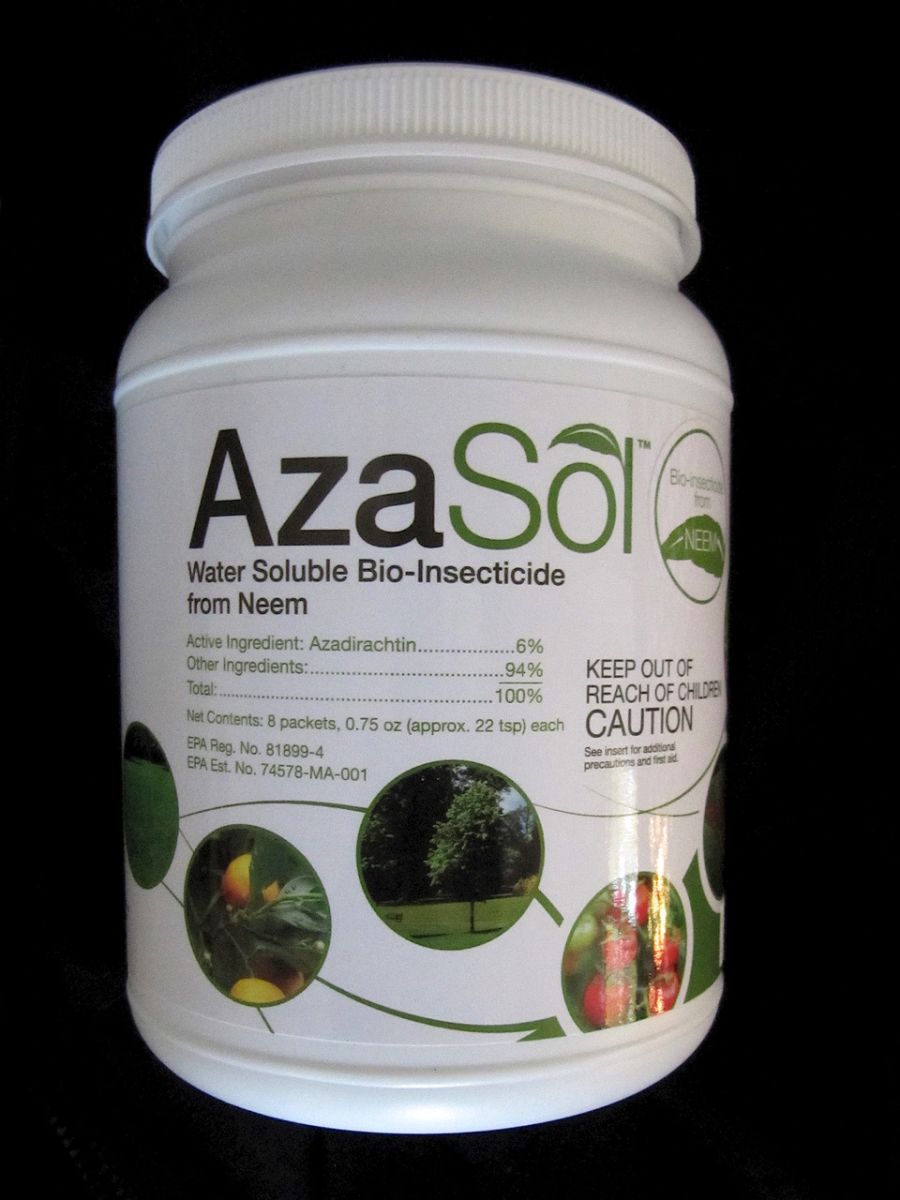
Now the bad news. Some of the current neem products on the market have short shelf lives and perform disappointingly due to decline of efficacy; many of the commonly sold liquid neem products fall into this category. A tip for neem users is that dry products appear to hold their power and have a better shelf life. The one that some of my arborist friends have used with success is AzaSol. It’s expensive but seems to work well.
