

Ladybug Newsletter
Ladybugs, ladybird beetles and lady beetles are all the same beneficial insects – just different common names. The ladybug is considered the poster child of beneficial insects and there are hundreds of species. Since there is plenty of incorrect information about at least one of the many species of helpful insects, here’s a rundown on all the main players in this category.
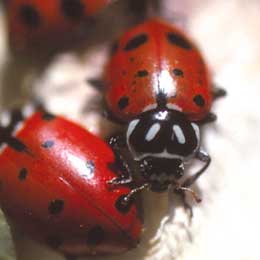 |
Convergent ladybug – Hippodamia convergens is one of our native ladybugs and the one that you will normally receive when buying from an insectary. |
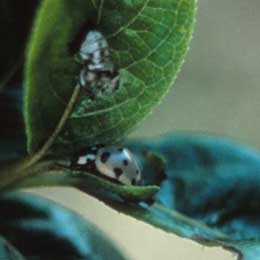 |
Ash gray ladybug – Olla v-nigrum, also called ashy gray lady beetle, is an unusual ladybug completely different from common the colorful species although in the same family (Coccinellidae). |
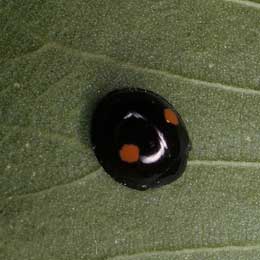 |
Twice stabbed ladybug – This pretty, shiny black, round ladybug with two red or orange spots on the back is a great friend because it likes to eat destructive scale insects. |
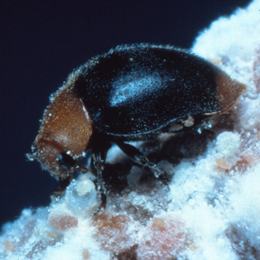 |
Mealybug destroyers – Cryptolaemus montrouzieri, also called mealybug ladybird, is unlike many of the often brightly colored Coccinellidae because it is predominantly brown and has no spots. |
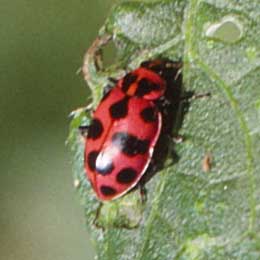 |
Pink spotted ladybug – The C-mac ladybug, found along the Canadian and the United States border region, fast, very active and a great feeder on eggs of other insects. |
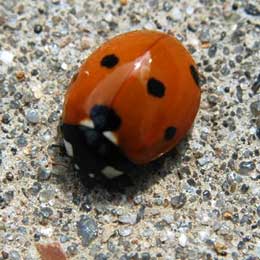 |
Seven-spotted ladybug – Coccinella septempunctata, in North America called “C-7”, is the most common ladybird in Europe and a voracious eater of aphids here. |
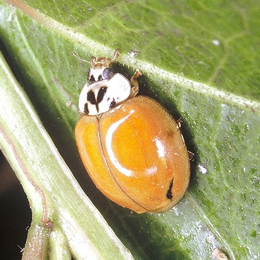 |
Asian ladybug – Harmonia axyridis is native to China, Russia, Korea and Japan, but has been here some time being imported in the 60’s to help with aphid control on crops. |
Naturally yours,

Howard Garrett
The Dirt Doctor